
Contents
Overview
Amazon RDS (Relational Database Service) Multi-AZ deployments were introduced by Amazon Web Services (AWS) to address the critical need for high availability in production database workloads. The core concept revolves around creating a synchronous standby replica of a primary database instance in a separate Availability Zone within the same AWS Region. This architecture, first detailed in AWS documentation and discussed on platforms like Reddit's r/aws, aims to provide resilience against infrastructure failures. Unlike earlier approaches that might have required manual intervention or complex custom solutions, Multi-AZ offers an automated, managed service for database high availability, building upon AWS's robust infrastructure and services like EC2 and EBS.
⚙️ How It Works
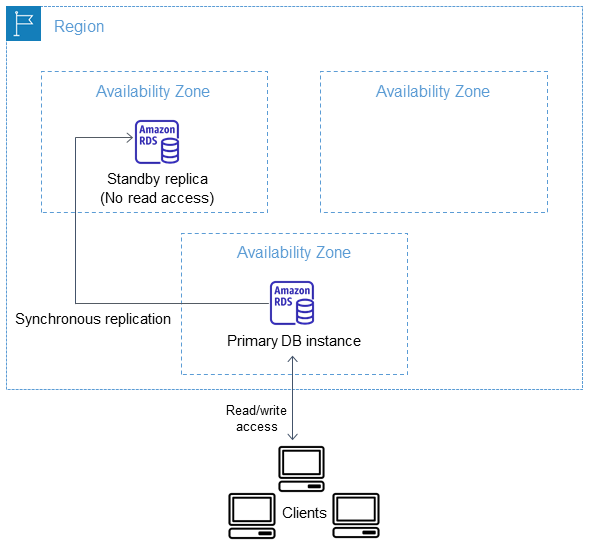
At its heart, Amazon RDS Multi-AZ functions through synchronous replication. When a write operation is performed on the primary database instance, the data is simultaneously replicated to the standby instance in the other Availability Zone. This ensures that the standby is always up-to-date with the primary. In the event of a failure affecting the primary instance or its Availability Zone, Amazon RDS automatically detects the issue and promotes the standby instance to become the new primary. This failover process is designed to be rapid, typically completing within 60-120 seconds for a Multi-AZ DB instance deployment, allowing applications to resume operations with minimal disruption, as explained in AWS documentation and on developer forums.
🌍 Types of Multi-AZ Deployments
Amazon RDS offers two primary types of Multi-AZ deployments: Multi-AZ DB instance deployments and Multi-AZ DB cluster deployments. A Multi-AZ DB instance deployment consists of one primary and one standby instance, where the standby is not directly accessible for read traffic and serves solely as a failover target. This is suitable for applications prioritizing high availability. For enhanced read capacity and faster failover times, Multi-AZ DB cluster deployments feature one writer instance and two readable standby instances, which can also serve read traffic. This cluster configuration, available for engines like MySQL and PostgreSQL, offers improved performance and scalability, as detailed in AWS User Guides and technical blogs.
🔮 Failover Process & Application Considerations
The failover process in Multi-AZ deployments is triggered by various events, including instance failure, AZ outages, storage issues, or planned maintenance like OS patching or instance class modifications. During a failover, the DNS record for the database endpoint is updated to point to the new primary instance, and applications must be designed to handle temporary connection drops and implement retry logic. This is crucial because while RDS manages the backend failover, applications might experience brief periods of unavailability. Configuring applications to manage DNS caching and connection pooling effectively, as recommended in AWS documentation and on platforms like OneUptime, is vital for a seamless transition during failover events, ensuring minimal impact on end-users and maintaining application stability, even when compared to solutions like Aurora or custom-built HA setups.
Key Facts
- Year
- 2009-present
- Origin
- Amazon Web Services (AWS)
- Category
- technology
- Type
- technology
Frequently Asked Questions
What is the difference between Multi-AZ DB instance and Multi-AZ DB cluster deployments?
A Multi-AZ DB instance deployment uses one standby replica that is not readable and serves only as a failover target. A Multi-AZ DB cluster deployment uses two readable standby replicas that can also serve read traffic, offering higher read capacity and potentially faster failover times. The cluster deployment is available for specific engines like MySQL and PostgreSQL.
How long does a Multi-AZ failover typically take?
For a Multi-AZ DB instance deployment, failover typically takes between 60 to 120 seconds. For a Multi-AZ DB cluster deployment, failover is generally faster, often completing in under 35 seconds. The exact duration can depend on factors like database activity and transaction volume at the time of failure.
Can I use the standby instance in a Multi-AZ deployment for read traffic?
In a standard Multi-AZ DB instance deployment, the standby instance is not directly accessible for read traffic; its sole purpose is to serve as a failover target. However, in a Multi-AZ DB cluster deployment, the two standby instances (readers) can be used to serve read traffic, enhancing read capacity.
What happens to the failed primary instance after a Multi-AZ failover?
After a failover, the failed primary instance is diagnosed by RDS. If it becomes available, it is brought back online and typically becomes the new standby instance, reinstating the high availability of the database. The recovery process may involve rebooting or replacing hardware depending on the detected fault.
How does Multi-AZ differ from cross-region replication?
Multi-AZ provides high availability within a single AWS Region by replicating data to a standby in a different Availability Zone. Cross-region replication, on the other hand, replicates data to another AWS Region, primarily for disaster recovery and global scalability, protecting against entire region failures.
References
- aws.amazon.com — /rds/features/multi-az/
- docs.aws.amazon.com — /AmazonRDS/latest/UserGuide/Concepts.MultiAZ.html
- docs.aws.amazon.com — /AmazonRDS/latest/UserGuide/Concepts.MultiAZSingleStandby.html
- dev.to — /aws-heroes/multi-az-in-amazon-rds-and-how-it-differs-from-high-availability-gn9
- reddit.com — /r/aws/comments/e2re2y/why_we_need_rds_multi_az/
- reddit.com — /r/aws/comments/1b0ic1s/how_does_rds_mutliaz_works/
- docs.aws.amazon.com — /AmazonRDS/latest/UserGuide/custom-sqlserver-multiaz.html
- pump.co — /blog/aws-rds-multi-az