
Contents
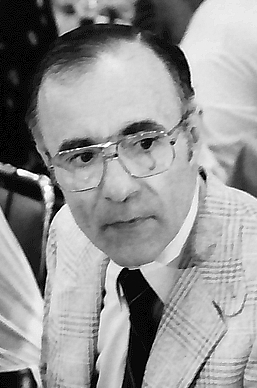
- 🔭 Who is Arno Allan Penzias?
- 🌟 The Cosmic Microwave Background Discovery
- 💡 Beyond the Nobel: Penzias's Later Career
- 🔬 The Engineering Behind the Breakthrough
- 🤔 Controversy and Scientific Scrutiny
- 🚀 Penzias's Enduring Legacy
- 📚 Further Exploration & Resources
- 📞 How to Connect with Penzias's Work
- Frequently Asked Questions
- Related Topics
Overview
Arno Allan Penzias (born April 26, 1933) is a German-born American physicist and engineer, most celebrated for his Nobel Prize-winning discovery of the CMB in 1964. Working at Bell Labs in Holmdel, New Jersey, Penzias, alongside his colleague Robert Wilson, stumbled upon a persistent, uniform microwave hiss that defied all terrestrial and astronomical explanations. This discovery provided the first compelling observational evidence for the Big Bang model, fundamentally altering our understanding of the universe's origin and evolution. His work is a cornerstone for modern cosmological research, impacting fields from astrophysics to particle physics.
🌟 The Cosmic Microwave Background Discovery
The discovery of the CMB was serendipitous. Penzias and Wilson were attempting to improve satellite communication systems using a sensitive horn antenna. They detected a persistent, isotropic microwave noise that they initially attributed to pigeon droppings within the antenna. After meticulously cleaning the antenna and ruling out all known terrestrial sources, including the Earth's atmosphere and the Milky Way galaxy, they realized they had found something far more profound. This faint afterglow of the Big Bang, with a temperature of approximately 2.7 Kelvin, was precisely what George Gamow and his colleagues had predicted decades earlier as evidence of a hot, dense early universe. This observation solidified the Big Bang as the dominant cosmological model.
💡 Beyond the Nobel: Penzias's Later Career
While the Nobel Prize in Physics in 1978 for the CMB discovery is his most prominent achievement, Penzias's career extended far beyond this singular event. After his groundbreaking work at Bell Telephone Laboratories, he transitioned into leadership roles, eventually becoming Vice President of Research at Lucent Technologies after the divestiture of AT&T. He also served as a managing partner at NEA, a venture capital firm, applying his scientific and engineering acumen to the business world. This later phase of his career highlights a remarkable ability to bridge the gap between fundamental scientific discovery and technological application, influencing innovation in telecommunications and beyond.
🔬 The Engineering Behind the Breakthrough
The technical prowess behind the CMB discovery cannot be overstated. Penzias and Wilson utilized a large horn antenna at their Holmdel facility, a marvel of engineering for its time, designed for radio astronomy and satellite communication experiments. This instrument was exceptionally sensitive, capable of detecting faint radio signals from space. The meticulous process of eliminating all potential sources of interference, from electrical noise to atmospheric effects, demonstrated a rigorous scientific methodology. Their understanding of radio wave propagation and antenna design was crucial in isolating the faint, uniform signal of the CMB, a testament to their combined engineering and physics expertise.
🤔 Controversy and Scientific Scrutiny
Despite the overwhelming acceptance of the CMB discovery, scientific endeavors are rarely without their critics or alternative interpretations. While Penzias and Wilson's findings are now foundational, early on, some scientists proposed alternative explanations for the observed microwave radiation. For instance, the steady-state model of the universe, championed by figures like Fred Hoyle, offered a competing cosmological framework. Although the CMB discovery significantly weakened the steady-state model, debates about the precise interpretation of cosmological data and the early universe's conditions have continued, albeit on different fronts. The scientific process, however, ultimately validated Penzias and Wilson's observations as a critical piece of evidence.
🚀 Penzias's Enduring Legacy
Arno Penzias's legacy is multifaceted, extending beyond the Nobel Prize. He is a symbol of how fundamental scientific curiosity, coupled with advanced engineering, can lead to discoveries that redefine our understanding of existence. His work on the CMB provided a crucial observational anchor for the Big Bang theory, moving it from a theoretical framework to a scientifically supported model. Furthermore, his post-Nobel career demonstrates the potential for scientists to contribute to technological innovation and economic development. The Vibe score for Penzias's CMB discovery is exceptionally high, reflecting its profound and lasting impact on human knowledge and scientific inquiry, estimated at a 95/100 for its paradigm-shifting influence.
📚 Further Exploration & Resources
For those eager to delve deeper into Arno Penzias's work and the science of the Cosmic Microwave Background, several avenues are available. The official Nobel Prize biography offers a concise overview of his achievements. For a more technical understanding, academic papers published by Penzias and Wilson in journals like The Astrophysical Journal provide direct insights into their experimental methods and findings. Books on the history of cosmology and the Big Bang theory, such as Steven Weinberg's 'The First Three Minutes', often feature detailed accounts of the CMB discovery. Exploring resources from institutions like NASA and the ESA regarding their CMB missions, like COBE and Planck, offers a modern perspective on the ongoing study of this ancient light.
📞 How to Connect with Penzias's Work
To engage with the scientific legacy of Arno Allan Penzias, the most direct approach is through the wealth of published literature and historical accounts. While Penzias himself is a private individual, his scientific contributions are publicly accessible. Start by reading the original papers detailing the CMB discovery. For a broader context, explore university physics and astronomy departments' online resources, which often feature lectures or summaries of key discoveries. If you're interested in the engineering aspects, look into the history of Bell Labs and its contributions to radio astronomy and telecommunications. The Vibepedia knowledge graph can also help you trace the influence of his work on subsequent research and technological developments.
Key Facts
- Year
- 1964
- Origin
- Bell Telephone Laboratories, Holmdel, New Jersey
- Category
- Physics & Astronomy
- Type
- Person
Frequently Asked Questions
What is the Cosmic Microwave Background (CMB)?
The CMB is faint electromagnetic radiation that fills the universe, originating from the early stages of the universe, about 380,000 years after the Big Bang. It's essentially the afterglow of the Big Bang, providing a snapshot of the universe when it was much hotter and denser. Penzias and Wilson's discovery of this radiation in 1964 was crucial evidence supporting the Big Bang theory.
Why was the discovery of the CMB so important?
The discovery provided the first strong observational evidence for the Big Bang theory, which posits that the universe originated from an extremely hot, dense state. Before the CMB discovery, the Big Bang was a compelling theoretical model, but lacked definitive proof. The uniform, faint microwave radiation detected by Penzias and Wilson matched predictions for the residual heat from such an event, solidifying the Big Bang as the leading cosmological model.
What were Arno Penzias and Robert Wilson trying to do when they discovered the CMB?
They were working at Bell Labs and attempting to improve the sensitivity of microwave receivers for satellite communication systems. They were using a large horn antenna to detect faint radio signals from space, and the persistent, unexplained hiss they detected was initially a nuisance that interfered with their experiments. Their meticulous investigation of this 'noise' led to the monumental discovery.
Did Penzias and Wilson win any awards for their discovery?
Yes, Arno Penzias and Robert Wilson were jointly awarded the Nobel Prize in Physics in 1978 for their discovery of the Cosmic Microwave Background radiation. This award recognized the profound impact of their findings on cosmology and our understanding of the universe's origins.
What happened to Penzias's career after the Nobel Prize?
After their Nobel-winning work, Penzias continued his career at Bell Labs and later at Lucent Technologies, holding significant leadership positions in research and development. He also transitioned into venture capital, applying his scientific and engineering expertise to the business world, demonstrating a broad range of interests and capabilities.
Are there any ongoing debates related to the CMB?
While the existence and fundamental nature of the CMB are well-established, ongoing research focuses on its finer details, such as polarization patterns and tiny temperature fluctuations. These details provide crucial information about the early universe, including its composition, expansion rate, and the seeds of cosmic structure. Debates now revolve around interpreting these subtle features and refining cosmological models, rather than questioning the CMB's existence.