
Contents
Overview
The genesis of ballet can be traced to the lavish Italian Renaissance courts of the 15th and 16th centuries, where elaborate spectacles served as aristocratic entertainment. These early 'court ballets' were not performances in the modern sense but rather integrated theatrical events featuring dance, music, poetry, and elaborate costumes, designed to showcase the wealth and sophistication of noble families. The marriage of Catherine de' Medici to Henry II of France in 1533 proved instrumental, as she brought Italian artistic sensibilities, including dance, to the French court. Her patronage led to significant developments, most notably the 'Ballet Comique de la Reine' in 1581, considered by many historians to be the first true ballet. This era was characterized by aristocratic participation, with nobles themselves often performing, solidifying ballet's status as a noble pursuit rather than a professional art form.
⚙️ How It Works
At its core, ballet is defined by its rigorous technique, characterized by precise body alignment, codified steps, and a vocabulary of movements executed with grace and control. The technique emphasizes turnout of the legs from the hips, pointed feet, and an upright posture, all contributing to an illusion of lightness and ethereal quality. Key elements include plié (bending), tendu (stretching), relevé (rising on the balls of the feet), and a range of jumps and turns. Professional ballet relies on a structured system of training, typically beginning in childhood at specialized academies. Dancers train rigorously to achieve the strength, flexibility, and artistry required for performances, which often involve complex choreography demanding exceptional coordination and musicality.
📊 Key Facts & Numbers
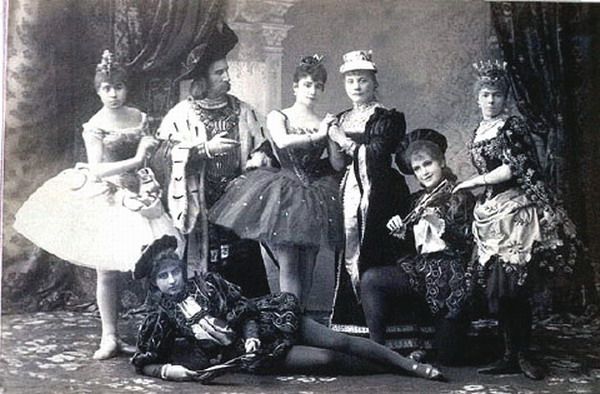
The professionalization of ballet saw significant milestones. Louis XIV of France, an avid dancer himself, was a passionate dancer and patron who founded the Royal Academy of Dance in 1661, laying the groundwork for professional ballet. The first professional ballet company, the Paris Opera Ballet, was founded in 1669, marking a shift from amateur aristocratic performance to a dedicated corps of dancers. By the late 19th century, the Imperial Russian Ballet (now Bolshoi Ballet and Mariinsky Ballet) had produced iconic works like Swan Lake (1877) and The Sleeping Beauty (1890). Today, major ballet companies worldwide, such as the Royal Ballet in London and the New York City Ballet, employ hundreds of dancers, with annual budgets often exceeding tens of millions of dollars.
👥 Key People & Organizations
Key figures have shaped ballet's trajectory. Catherine de' Medici was instrumental in ballet's early development in France, commissioning significant court ballets. Louis XIV, the 'Sun King,' was a passionate dancer and patron who founded the Royal Academy of Dance in 1661, laying the groundwork for professional ballet. In the 19th century, choreographer Marius Petipa revolutionized classical ballet in Russia, creating enduring masterpieces. The early 20th century saw the avant-garde innovations of Sergei Diaghilev and his Ballets Russes, which collaborated with artists like Pablo Picasso and Igor Stravinsky. More recently, George Balanchine redefined ballet in America with his neoclassical style at the New York City Ballet.
🌍 Cultural Impact & Influence
Ballet's influence extends far beyond the stage, permeating visual arts, literature, and popular culture. Its aesthetic principles of line, form, and harmony have inspired painters and sculptors, while its dramatic narratives have been adapted into novels and films. The very concept of disciplined, physical artistry has become a cultural touchstone, often invoked to describe dedication and precision in other fields. Furthermore, ballet's global spread has led to the development of distinct national styles, from the technical purity of the French school to the dramatic expressiveness of the Russian tradition and the innovative spirit of American ballet. Its visual language, characterized by elegant lines and dynamic movement, has been adopted in fashion design and advertising, demonstrating its enduring aesthetic appeal.
⚡ Current State & Latest Developments
The contemporary ballet landscape is dynamic, marked by a push for greater diversity and inclusivity. Companies are actively working to cast dancers of varied ethnicities, body types, and backgrounds, challenging historical norms. Choreographers are exploring new thematic material, incorporating social commentary and contemporary issues into their works. There's also a growing interest in cross-disciplinary collaborations, with ballet companies partnering with contemporary artists, musicians, and technologists to create innovative performances. Digital platforms are increasingly being utilized for streaming performances and educational content, expanding ballet's reach to a global audience beyond traditional theatergoers, with many companies now maintaining robust YouTube channels and online archives.
🤔 Controversies & Debates
One persistent controversy revolves around the physical demands and potential for injury inherent in ballet training, leading to debates about training methods and dancer welfare. The historical lack of diversity, particularly regarding racial representation and body positivity, has also been a significant point of contention, prompting calls for systemic change within major institutions. Furthermore, questions arise about the relevance of classical narratives in a modern context, leading to discussions on updating repertoire or commissioning new works that reflect contemporary society. The economic sustainability of professional ballet companies, often reliant on public funding and private donations, remains a constant challenge, especially in the wake of global events like the COVID-19 pandemic which significantly impacted live performance revenue.
🔮 Future Outlook & Predictions
The future of ballet appears to be one of continued evolution and adaptation. We can anticipate further exploration of digital technologies, potentially leading to immersive virtual reality ballet experiences or AI-assisted choreography. The drive for inclusivity will likely continue, with more diverse voices shaping the art form both on and off stage. Choreographers may increasingly blend ballet with other dance styles and performance art forms, blurring traditional boundaries. There's also a potential for ballet to engage more directly with scientific research, perhaps exploring biomechanics for injury prevention or even using data analytics to understand audience engagement and choreographic patterns. The economic models for ballet companies may also shift, with greater emphasis on diversified revenue streams and digital content creation.
💡 Practical Applications
Ballet's rigorous training regimen offers significant practical applications beyond performance. The discipline, focus, and physical control cultivated through ballet are transferable to numerous fields. For instance, physical therapy often incorporates balletic principles for rehabilitation and strengthening. In sports science, ballet training is recognized for enhancing athletes' flexibility, balance, and coordination. The emphasis on spatial awareness and precise execution is also valuable in fields like architecture and choreography for other performance arts. Furthermore, the storytelling and emotional expression inherent in ballet can be applied in acting and theater production to deepen character portrayal and narrative impact.
Key Facts
- Category
- history
- Type
- topic