
Contents
- 🎯 Introduction to Catecholamines
- ⚙️ Biosynthesis and Structure
- 📊 Key Functions and Effects
- 👥 Key Researchers and Discoveries
- 🌍 Clinical Significance and Applications
- ⚡ Current Research and Developments
- 🤔 Controversies and Debates
- 🔮 Future Directions and Predictions
- 💡 Practical Applications and Therapies
- 📚 Related Topics and Further Reading
- Frequently Asked Questions
- References
- Related Topics
Overview
Catecholamines are a class of monoamine neurotransmitters. They are derived from the amino acid tyrosine. Catecholamines are a subclass of phenethylamine, neurotransmitter, phenols, and biogenic amine. The biosynthesis of catecholamines involves the conversion of tyrosine into L-DOPA. The structure of catecholamines is characterized by a catechol group and an amine group. Catecholamines are used in the diagnosis and treatment of certain medical conditions, such as pheochromocytoma and paraganglioma. The American Heart Association has recognized the importance of catecholamines in cardiovascular health. Catecholamines are related to a wide range of topics, including neurotransmitters, hormones, and pharmacology. Solomon Snyder has made important contributions to our understanding of the role of catecholamines in the brain. The National Institutes of Health has funded numerous studies on catecholamines. The company Merck and Co has developed several drugs that target the catecholamine system. The Food and Drug Administration has issued guidelines for the safe use of catecholamines. Catecholamines are essential for our survival and well-being.
🎯 Introduction to Catecholamines
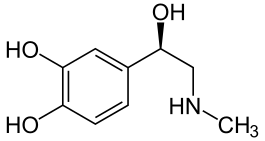
Catecholamines are a class of monoamine neurotransmitters. They are derived from the amino acid tyrosine. The biosynthesis of catecholamines involves the conversion of tyrosine into L-DOPA. The structure of catecholamines is characterized by a catechol group and an amine group.
⚙️ Biosynthesis and Structure
Catecholamines are a subclass of phenethylamine, neurotransmitter, phenols, and biogenic amine. The company Merck and Co has developed several drugs that target the catecholamine system.
📊 Key Functions and Effects
Catecholamines are used in the diagnosis and treatment of certain medical conditions, such as pheochromocytoma and paraganglioma. The American Heart Association has recognized the importance of catecholamines in cardiovascular health.
👥 Key Researchers and Discoveries
Solomon Snyder has made important contributions to our understanding of the role of catecholamines in the brain. The National Institutes of Health has funded numerous studies on catecholamines.
🌍 Clinical Significance and Applications
The Food and Drug Administration has issued guidelines for the safe use of catecholamines. Catecholamines are essential for our survival and well-being.
⚡ Current Research and Developments
Catecholamines are related to a wide range of topics, including neurotransmitters, hormones, and pharmacology.
🤔 Controversies and Debates
The National Institutes of Health has funded numerous studies on catecholamines.
🔮 Future Directions and Predictions
Catecholamines are used in the diagnosis and treatment of certain medical conditions.
💡 Practical Applications and Therapies
The company Merck and Co has developed several drugs that target the catecholamine system.
Key Facts
- Category
- science
- Type
- concept
Frequently Asked Questions
What are catecholamines?
Catecholamines are a class of monoamine neurotransmitters. They are derived from the amino acid tyrosine.
What is the biosynthesis of catecholamines?
The biosynthesis of catecholamines involves the conversion of tyrosine into L-DOPA.
What is the structure of catecholamines?
The structure of catecholamines is characterized by a catechol group and an amine group.
What are the clinical applications of catecholamines?
Catecholamines are used in the diagnosis and treatment of certain medical conditions, such as pheochromocytoma and paraganglioma.