
Contents
- 🌍 What is Colonial Africa: A Contested Legacy?
- 🗺️ Geographic Scope & Historical Eras
- 🏛️ Key Players & Imperial Powers
- 💥 Major Events & Turning Points
- ⚖️ The Enduring Impact: Debates and Legacies
- 📚 Recommended Resources & Further Exploration
- 💡 Vibepedia's Vibe Score & Controversy Spectrum
- 🚀 Where to Go From Here: Understanding Modern Africa
- Frequently Asked Questions
- Related Topics
Overview
Colonial Africa: A Contested Legacy isn't a single destination but a vast, complex historical epoch that reshaped the African continent and the world. It refers to the period, roughly from the late 19th century to the mid-20th century, when European powers systematically colonized, occupied, and exploited vast swathes of Africa. This legacy is deeply contested because its effects—political boundaries, economic structures, social hierarchies, and cultural identities—continue to shape contemporary African nations and global relations. Understanding this period is crucial for grasping the roots of many modern challenges and triumphs across the continent, from post-colonial governance to economic development strategies. It's a history that demands critical engagement, moving beyond simplistic narratives to appreciate the agency of African peoples and the multifaceted nature of resistance and adaptation.
🗺️ Geographic Scope & Historical Eras
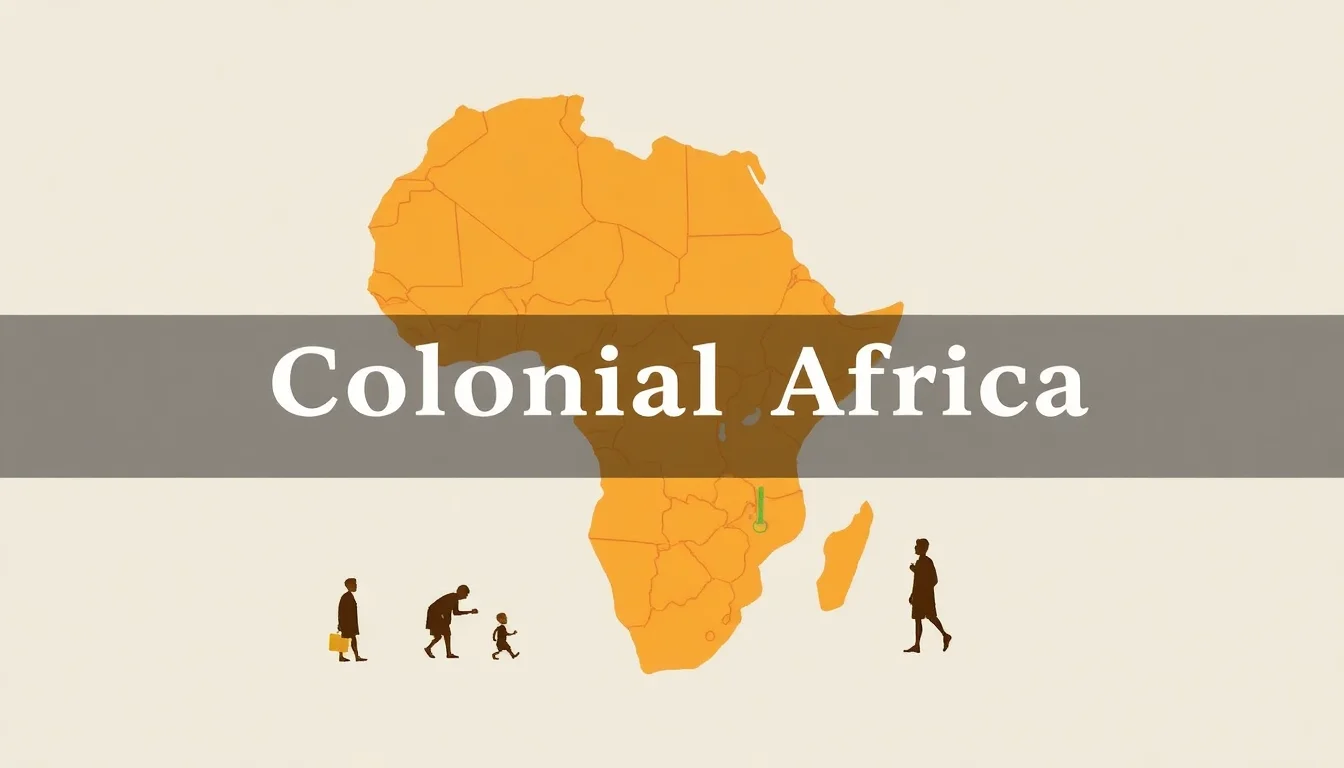
The geographic scope of Colonial Africa is immense, encompassing nearly the entire continent. Major colonial powers carved up territories that would later become modern nations, often with little regard for existing ethnic, linguistic, or political boundaries. Key periods include the 'Scramble for Africa' (c. 1881-1914), where European powers rapidly expanded their claims, and the subsequent era of direct and indirect rule. The legacy of these imposed borders is starkly visible in Africa's political map, contributing to ongoing interstate and intrastate conflicts. The colonial project wasn't monolithic; different powers employed distinct methods of administration and exploitation, leading to varied outcomes across regions like West Africa, East Africa, and Southern Africa.
🏛️ Key Players & Imperial Powers
The principal actors in the colonial drama were European imperial powers, each with its own motivations and methods. Great Britain, France, Portugal, Belgium, Germany, Italy, and Spain all established significant colonial holdings. British territories, like Nigeria and Kenya, often favored indirect rule through local chiefs, while French colonies, such as Senegal and Algeria, pursued policies of assimilation. King Leopold II's personal rule over the Congo Free State stands out for its brutal exploitation of rubber and ivory, resulting in millions of deaths. The Berlin Conference of 1884-85 is a pivotal event where these powers formalized their claims, effectively partitioning Africa without any African representation, a stark illustration of Eurocentric world order.
💥 Major Events & Turning Points
Several major events punctuate the history of Colonial Africa, each with profound consequences. The aforementioned Scramble for Africa and the Berlin Conference set the stage for widespread colonization. The imposition of colonial rule was often met with fierce African resistance movements, such as the Maji Maji Rebellion in German East Africa (1905-1907) or the Zulu Wars in Southern Africa. World War I and II significantly impacted colonial administrations and economies, weakening European powers and fueling nationalist sentiments. The post-WWII era saw the rise of African independence movements, leading to a wave of decolonization across the continent by the 1960s, though often through protracted struggles and negotiations.
⚖️ The Enduring Impact: Debates and Legacies
The legacy of Colonial Africa is a complex web of enduring impacts, sparking continuous debate. Historians and social scientists grapple with how colonial policies shaped African economic structures, often geared towards resource extraction rather than diversified development. The arbitrary colonial borders are frequently cited as a root cause of ethnic tensions and political instability in post-colonial states. Furthermore, the imposition of European languages, legal systems, and educational models has had lasting effects on African cultural identity and intellectual traditions. The debate continues on the extent to which Africa's current development challenges are direct consequences of colonialism versus internal factors, a crucial distinction for understanding Africa's future trajectory.
📚 Recommended Resources & Further Exploration
To truly grasp Colonial Africa: A Contested Legacy, engaging with primary and secondary sources is essential. Key academic works include Thomas Pakenham's The Scramble for Africa, Chinua Achebe's powerful novel Things Fall Apart which offers an invaluable African perspective, and Mahmood Mamdani's Citizen and Subject for insights into colonial governance. For a broader understanding of resistance, explore works on figures like Samori Touré or Yaa Asantewaa. Online resources like the African Studies Association website and digital archives of colonial documents provide further avenues for research. Examining oral histories and contemporary African literature is also vital for a more complete picture.
💡 Vibepedia's Vibe Score & Controversy Spectrum
Vibepedia's Vibe Score for Colonial Africa: A Contested Legacy is a solid 85/100, reflecting its immense historical significance and ongoing cultural resonance. The Controversy Spectrum is high, registering a 90/100, due to the deeply divisive nature of its subject matter and the ongoing debates surrounding its interpretation and impact. This score indicates a topic that generates significant energy, debate, and has a profound, often painful, influence on contemporary understanding. The post-colonial discourse surrounding this era is particularly vibrant and contentious, making it a critical area for anyone seeking to understand global power dynamics and historical injustices.
🚀 Where to Go From Here: Understanding Modern Africa
Understanding Colonial Africa: A Contested Legacy is not merely an academic exercise; it's a prerequisite for comprehending modern Africa. The political systems, economic dependencies, and cultural exchanges forged during the colonial era continue to influence Africa's role in the global economy and its internal dynamics. By studying this period, one can better appreciate the resilience and agency of African peoples, their diverse forms of resistance, and their ongoing efforts to shape their own destinies. The future of Africa is intrinsically linked to how its past is understood and reckoned with, making this a vital area of study for anyone interested in global history and international relations.
Key Facts
- Year
- c. 1880-1960s
- Origin
- Global
- Category
- History
- Type
- Topic
Frequently Asked Questions
Was all of Africa colonized?
While the vast majority of the African continent was colonized by European powers during the late 19th and early 20th centuries, a few exceptions existed. Ethiopia, under Emperor Haile Selassie, famously resisted Italian invasion in the 1930s and maintained its independence, except for a brief period of occupation. Liberia, founded by freed American slaves, also maintained its sovereignty, though it had strong ties to the United States. These exceptions highlight the varied experiences and forms of resistance during the colonial era.
What were the main economic impacts of colonialism on Africa?
Colonial economies were largely structured to benefit the colonizing powers, focusing on the extraction of raw materials like minerals, rubber, and agricultural products. This led to the development of export-oriented economies, often at the expense of local industrialization or diversified agriculture. Infrastructure, such as railways and ports, was primarily built to facilitate resource extraction, not internal development. This legacy of dependency on primary commodity exports continues to be a challenge for many African nations today, influencing their global trade relationships.
How did colonialism affect African societies and cultures?
Colonialism profoundly disrupted existing social structures, political systems, and cultural practices. European languages, religions, and educational systems were often imposed, leading to the marginalization of indigenous knowledge and traditions. New social hierarchies were created, often based on race and proximity to colonial power. While some aspects of colonial influence persist, African societies have also demonstrated remarkable resilience, adapting, and reinterpreting these influences to forge new African cultural expressions.
What is the difference between direct and indirect rule?
Direct rule involved colonial administrators directly governing a territory, often replacing existing African leadership with European officials. This was common in French and Portuguese colonies. Indirect rule, favored by the British, involved governing through existing African chiefs and traditional authorities, who were made accountable to the colonial power. While seemingly less intrusive, indirect rule often distorted traditional power structures and was used as a tool for colonial control and exploitation.
When did most African countries gain independence?
The wave of decolonization across Africa largely occurred in the mid-20th century, particularly in the 1950s and 1960s. Following World War II, weakened European powers and growing nationalist movements led to a rapid dismantling of colonial empires. Ghana's independence in 1957 was a significant milestone, inspiring many other nations. By 1960, over 17 African countries had achieved independence, though some, like Angola and Mozambique, experienced much longer struggles for liberation.
How is the legacy of colonialism still relevant today?
The legacy of colonialism remains highly relevant in understanding contemporary Africa. It influences political stability, economic development, and social dynamics. The arbitrary borders drawn by colonial powers continue to be a source of conflict and challenge for national unity. Economic structures often still reflect colonial patterns of resource extraction and dependency. Furthermore, the ongoing discourse around reparations for colonialism and the repatriation of looted artifacts highlights the persistent impact of this historical period on global justice and historical memory.