
Contents
Overview
The concept of drug resistance isn't new; historical accounts suggest that even ancient remedies might have faced organisms that were less susceptible. However, the modern understanding and clinical challenge of drug resistance truly began with the advent of antimicrobial chemotherapy in the early 20th century. Paul Ehrlich's pioneering work on syphilis treatment in the early 1900s, leading to the development of arsphenamine (Salvarsan), demonstrated early on that pathogens could develop resistance. The widespread introduction of penicillin after World War II, hailed as a miracle drug, soon revealed the adaptive power of bacteria like Staphylococcus aureus, which rapidly acquired resistance mechanisms. This pattern repeated with subsequent drug classes, from sulfonamides to tetracyclines, highlighting a recurring evolutionary dynamic between drug discovery and microbial adaptation. The field of cancer chemotherapy also grappled with resistance from its inception, with early observations of tumor cells becoming refractory to cytotoxic agents.
⚙️ How It Works
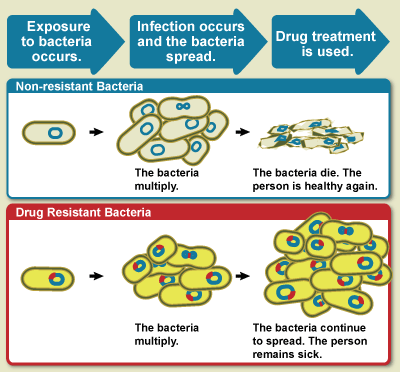
Drug resistance mechanisms are diverse and highly specific to the drug and the organism. For antimicrobials, common strategies include: Target Modification, where mutations alter the drug's binding site, rendering it ineffective (e.g., mutations in ribosomal RNA genes conferring resistance to macrolides). Drug Inactivation, where enzymes produced by the organism chemically modify or degrade the drug (e.g., beta-lactamases that break down penicillin). Efflux Pumps, transmembrane proteins that actively transport the drug out of the cell before it can reach its target (e.g., multidrug resistance (MDR) pumps in bacteria and cancer cells). Reduced Permeability, where changes in the cell membrane or wall decrease drug entry. In cancer, resistance can also involve Bypass Pathways, where cells develop alternative signaling routes that circumvent the drug's inhibitory effect, or Apoptosis Evasion, where cancer cells become resistant to programmed cell death signals.
📊 Key Facts & Numbers
The scale of drug resistance is staggering. Resistance to imatinib (Gleevec) is a major challenge in treating chronic myeloid leukemia.
👥 Key People & Organizations
Pioneering researchers like René Dubos, who discovered tyrothricin and later advocated for judicious antibiotic use, laid early groundwork. Alexander Fleming's serendipitous discovery of penicillin in 1928, and its subsequent large-scale production by Howard Florey and Ernst Chain, revolutionized medicine but also set the stage for resistance. Key organizations like the WHO and the CDC are at the forefront of tracking and combating AMR. In cancer research, scientists like Bert Vogelstein have made significant contributions to understanding the genetic basis of cancer and its resistance mechanisms. Pharmaceutical giants like Pfizer, Merck, and Novartis are major players in developing both drugs and resistance-fighting strategies, though the pipeline for novel antibiotics remains critically thin.
🌍 Cultural Impact & Influence
Drug resistance has profoundly shaped public health policy and medical practice. The fear of untreatable infections has led to public health campaigns promoting antibiotic stewardship and responsible prescribing. The rise of 'superbugs' has become a recurring theme in news cycles and popular culture, often depicted in dystopian scenarios of medical collapse. This has fueled public awareness and, at times, panic, influencing consumer choices regarding food production (e.g., demand for antibiotic-free meat). In oncology, the understanding of resistance has led to the development of combination therapies and targeted agents, aiming to overcome or delay resistance, and has spurred research into precision medicine approaches. The economic implications are also vast, impacting healthcare costs, agricultural practices, and the pharmaceutical industry's investment strategies.
⚡ Current State & Latest Developments
The current landscape is defined by an escalating crisis. The COVID-19 pandemic exacerbated AMR concerns, with increased antibiotic use in hospitalized patients leading to a surge in resistant infections. New classes of antibiotics are scarce. Meanwhile, cancer research is making strides in understanding liquid biopsies to detect resistance early and developing novel therapies like CAR T-cell therapy and bispecific antibodies that may circumvent some resistance mechanisms. The development of CRISPR technology is also opening new avenues for gene-editing approaches to combat resistance. Regulatory bodies like the FDA are implementing new frameworks to incentivize antibiotic development, such as the Generating Antibiotic Incentives Now (GAIN) Act.
🤔 Controversies & Debates
A central controversy revolves around the economic model for antibiotic development. Pharmaceutical companies argue that the low prices and short treatment durations for antibiotics, coupled with the rapid emergence of resistance, make them unprofitable compared to chronic disease medications. This has led to a critical market failure, with many companies exiting the antibiotic space. Another debate concerns the role of agriculture; while many agree that reducing antibiotic use in livestock is crucial, the extent of this reduction and the specific practices involved remain contentious, particularly in regions with intensive farming. Furthermore, the ethical implications of gene-editing technologies like CRISPR for combating resistance are debated, focusing on potential off-target effects and unintended ecological consequences.
🔮 Future Outlook & Predictions
The future of combating drug resistance hinges on a multi-pronged approach. Innovations in drug discovery are crucial, including exploring novel targets, developing phage therapy, and repurposing existing drugs. Artificial intelligence and machine learning are increasingly being used to accelerate the identification of new drug candidates and predict resistance patterns. Vaccine development for bacterial pathogens, such as pneumococcal vaccines, offers a proactive strategy to prevent infections in the first place. In oncology, the trend towards personalized medicine, combining genomic profiling with adaptive treatment strategies, is expected to improve outcomes against resistant cancers. International collaboration and robust public health surveillance systems will be paramount to monitoring and responding to emerging resistance threats globally. The goal is to shift from a reactive approach to a proactive one, anticipating and outmaneuvering resistance before it becomes widespread.
💡 Practical Applications
Drug resistance mechanisms have direct implications across healthcare and beyond.
Key Facts
- Category
- science
- Type
- topic