
Contents
Overview
The invention of dynamite in 1867 by Alfred Nobel in Geesthacht, Germany, was a direct response to the inherent dangers of pure nitroglycerin. Nobel, already known for his work with explosives, sought a way to harness nitroglycerin's immense power without its extreme sensitivity to shock and friction. His breakthrough involved mixing liquid nitroglycerin with a porous, absorbent material, most famously kieselguhr (diatomaceous earth), creating a putty-like substance that was far more stable. This stabilization allowed for safer transport and handling, a critical factor that traditional black powder, despite its lower power, had always possessed. Nobel's patent, granted in 1867, marked a pivotal moment, moving explosives from crude, unpredictable agents to more controlled, industrial tools, fundamentally altering the trajectory of engineering and conflict.
⚙️ How It Works
Dynamite's efficacy stems from its chemical composition and physical form. At its heart is nitroglycerin, a highly unstable liquid explosive. Nobel's genius lay in immobilizing this liquid within a solid matrix of an inert, absorbent material, such as kieselguhr (diatomaceous earth), sawdust, or wood pulp. This sorbent acts like a sponge, soaking up the nitroglycerin and preventing it from coalescing or reacting prematurely. When detonated by a blasting cap—itself a smaller, more sensitive explosive charge—the nitroglycerin undergoes rapid decomposition, releasing a massive volume of hot gases. This rapid expansion creates the shockwave and concussive force characteristic of dynamite, enabling it to shatter rock and perform demolition tasks with unprecedented efficiency compared to black powder.
📊 Key Facts & Numbers
The impact of dynamite can be quantified by its sheer scale of adoption and destructive power. The construction of the Suez Canal in the 1860s, though completed before dynamite's widespread adoption, highlighted the need for more powerful explosives, a need dynamite would soon fill for projects like the Panama Canal and numerous railway lines across continents. The global market for explosives, with dynamite as a significant component, is projected to reach over $30 billion by 2027.
👥 Key People & Organizations
The story of dynamite is inextricably linked to its inventor, Alfred Nobel. His company, Nobel Industries, became a global enterprise, establishing factories and subsidiaries across Europe and the Americas. Other key figures include the workers and chemists who helped refine the manufacturing processes in Nobel's various plants, such as those in Geesthacht, Germany, and Ardeer, Scotland. While Nobel is the central figure, the widespread adoption and continued development of dynamite involved countless engineers, miners, and military personnel who utilized its power.
🌍 Cultural Impact & Influence
Dynamite's influence has been profound, reshaping landscapes and economies. Mining operations, particularly for precious metals and coal, became vastly more efficient, driving economic growth. In warfare, dynamite provided a powerful tool for demolition and siege tactics, though its civilian applications often overshadowed its military use. The very concept of controlled, powerful demolition became synonymous with dynamite, influencing everything from cinematic portrayals of explosions to the language used to describe impactful events. Its introduction also spurred the development of safety regulations and professional training for handling explosives, a legacy that continues to shape safety protocols in hazardous industries.
⚡ Current State & Latest Developments
While dynamite remains a foundational explosive, its dominance has waned in many sectors due to the development of even more powerful and specialized explosives. Modern blasting agents, such as ANFO (ammonium nitrate/fuel oil), have largely replaced dynamite in large-scale industrial applications like open-pit mining due to their lower cost and comparable safety profiles. However, dynamite, particularly in its gelatinous forms like gelignite and gelatin dynamite, is still employed in specific applications requiring high detonation velocity and water resistance, such as underwater blasting and certain types of demolition. The manufacturing of dynamite continues, albeit on a smaller scale, by companies like Dyno Nobel and Osin Explosives.
🤔 Controversies & Debates
The controversies surrounding dynamite are as explosive as the substance itself. Alfred Nobel famously expressed a desire for his invention to benefit humanity, yet he also profited immensely from its use in both industry and war. The ethical implications of creating such a powerful tool, capable of both construction and destruction, have been debated since its inception. The term 'dynamite' itself has become a metaphor for something powerfully disruptive, often with negative connotations, as seen in the historical Dynamite Club in Russia, a revolutionary group that used bombs. The potential for misuse by criminal organizations and terrorists remains a persistent concern, necessitating strict controls on its production and distribution by governments worldwide.
🔮 Future Outlook & Predictions
The future of dynamite is likely one of continued specialization rather than widespread replacement. While bulk blasting agents will dominate large-scale operations, dynamite's unique properties—high detonation velocity, water resistance, and predictable performance—ensure its continued relevance in niche applications. Research may focus on developing even more stable and environmentally benign formulations, potentially incorporating novel stabilizers or energy-releasing additives. The legacy of Nobel's invention will persist, not just in the chemical compounds, but in the ongoing human endeavor to harness powerful forces for progress, while simultaneously grappling with the inherent risks and ethical responsibilities that accompany such power. The development of precision-guided munitions in warfare has, however, shifted the focus away from brute explosive force in many military contexts.
💡 Practical Applications
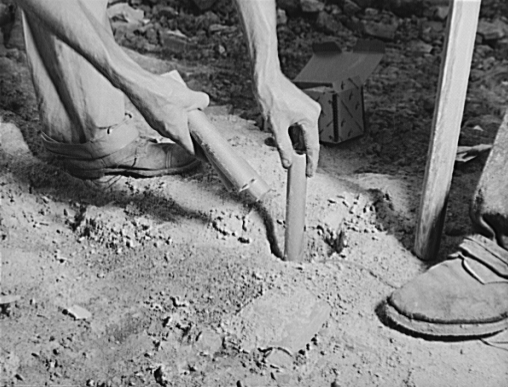
Dynamite's practical applications are vast and have fundamentally shaped the modern world. In mining and quarrying, it is indispensable for breaking down large volumes of rock to extract minerals and aggregate. Construction projects, from tunneling through mountains for railways and highways to excavating foundations for skyscrapers, rely heavily on dynamite's ability to excavate earth and rock efficiently. Demolition of old structures, bridges, and even entire buildings is often accomplished using carefully placed dynamite charges. Its use in seismic exploration for oil and gas reserves, where controlled explosions generate shockwaves to map underground geological formations, is another critical application. Even in specialized fields like icebreaking for rivers and canals, dynamite has been employed to clear blockages.
Key Facts
- Category
- technology
- Type
- topic