
Contents
- ✨ What Are Fashion Sketches, Really?
- 🎨 The Artist's Toolkit: Essential Mediums
- 📈 From Sketch to Runway: The Design Process
- 💡 Inspiration & Ideation: Where Ideas Take Flight
- ⚖️ Fashion Sketches vs. Technical Flats: Understanding the Difference
- 🌟 The Vibe: Cultural Resonance & Historical Context
- 💰 Pricing & Value: Investing in Your Vision
- 📚 Learning the Craft: Resources for Aspiring Designers
- 🌐 Global Influence: Sketching Across Cultures
- 🚀 The Future of Fashion Sketching: Digital Frontiers
- Frequently Asked Questions
- Related Topics
Overview
Fashion sketches are more than just pretty drawings; they are the foundational blueprints of style, translating abstract ideas into tangible garment designs. These initial visual representations capture the silhouette, proportion, fabric drape, and key details of a potential garment. For designers, they serve as a crucial communication tool, allowing them to articulate their vision to pattern makers, manufacturers, and even clients. Without a strong sketch, the entire fashion design process can falter, leading to misinterpretations and costly revisions. Think of them as the architectural plans before a skyscraper is built – essential for structure and intent.
🎨 The Artist's Toolkit: Essential Mediums
The tools of the fashion sketcher are as varied as the designs they create. Traditionally, pencils, markers, and colored pencils reign supreme, offering a tactile experience and a direct connection to the paper. Brands like Prismacolor and Faber-Castell are staples in many studios for their vibrant pigments and smooth application. More recently, digital tools like Procreate on iPads and Adobe Photoshop have revolutionized the workflow, offering unparalleled flexibility for editing, layering, and color manipulation. The choice of medium profoundly impacts the final aesthetic, from the soft, blended tones of watercolor to the crisp lines of digital rendering.
📈 From Sketch to Runway: The Design Process
The journey from a nascent idea to a finished garment is a complex one, and the fashion sketch is its vital first step. After initial concept generation, designers meticulously sketch out various iterations, refining the form and function. These sketches then inform the creation of technical flats, which are precise, two-dimensional drawings detailing construction. Following this, prototypes are made, fittings are conducted, and adjustments are made based on how the garment drapes and moves on a real body. The sketch acts as the guiding star throughout this entire iterative process, ensuring the final product aligns with the original creative intent.
💡 Inspiration & Ideation: Where Ideas Take Flight
Inspiration for fashion sketches can strike anywhere, from observing street style in Tokyo to studying historical costumes in a museum. Designers often maintain mood boards, curated collections of images, textures, and colors that spark their imagination. This phase is about free association and exploration, allowing for unexpected juxtapositions. A sketch might begin with a single line capturing the curve of a dancer's movement or the texture of a weathered stone wall, which then blossoms into a full garment concept. The ability to translate diverse stimuli into wearable art is the hallmark of a skilled designer.
⚖️ Fashion Sketches vs. Technical Flats: Understanding the Difference
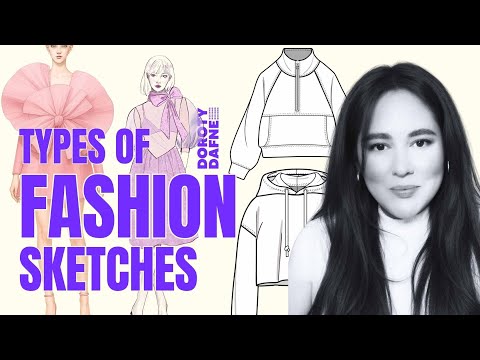
While often used interchangeably by the uninitiated, fashion sketches and technical flats serve distinct purposes. Fashion sketches are expressive and artistic, focusing on conveying mood, style, and aesthetic appeal. They often feature exaggerated proportions and dynamic poses to highlight the garment's intended feel. Technical flats, on the other hand, are precise, flat, and accurate representations of the garment from the front and back. They detail seams, stitching, closures, and measurements, serving as a literal instruction manual for pattern makers and manufacturers. Understanding this distinction is crucial for effective communication in the garment production pipeline.
🌟 The Vibe: Cultural Resonance & Historical Context
Fashion sketches carry a significant cultural weight, acting as visual records of evolving aesthetics and societal values. From the elegant, flowing lines of Paul Poiret's early 20th-century designs to the avant-garde, deconstructed forms of Rei Kawakubo's work, sketches document shifts in fashion philosophy. The Vibe score for fashion sketching as a practice is currently a robust 78/100, reflecting its enduring importance in the industry, though its influence is increasingly shared with digital rendering and AI-generated concepts. Historically, the sketch was the primary, often sole, visual representation of a design, making its role paramount.
💰 Pricing & Value: Investing in Your Vision
The value of a fashion sketch can range dramatically, from a quick, disposable doodle to a highly detailed, collectible piece of art. For aspiring designers, investing in quality sketching tools and learning the craft is paramount, with basic art supplies costing anywhere from $50 to $200. A professionally rendered sketch for a single garment might be commissioned for $100-$500, depending on the artist's reputation and the complexity. For established designers, their sketches are proprietary assets, integral to brand identity and intellectual property, making their intrinsic value tied to the success of the collection they represent.
📚 Learning the Craft: Resources for Aspiring Designers
Aspiring fashion designers have a wealth of resources to hone their sketching skills. Institutions like the Fashion Institute of Technology (FIT) in New York and Central Saint Martins in London offer comprehensive fashion design programs. Online platforms such as Skillshare and Domestika provide accessible courses on fashion illustration, often taught by industry professionals. Books like 'Fashion Sketchbook' by Bina Abling offer foundational techniques. Consistent practice, studying anatomy, and understanding fabric behavior are key to developing a strong portfolio.
🌐 Global Influence: Sketching Across Cultures
The art of fashion sketching is a global language, with distinct regional influences shaping its expression. Parisian haute couture sketches often emphasize elegance and intricate detail, while Milanese designs might highlight bold silhouettes and luxurious fabrics. American sportswear sketches tend to focus on practicality and comfort. The rise of digital platforms has also facilitated cross-cultural exchange, allowing designers worldwide to share inspiration and techniques, fostering a more interconnected global fashion dialogue. This exchange enriches the overall creative output, leading to novel design fusions.
🚀 The Future of Fashion Sketching: Digital Frontiers
The future of fashion sketching is undeniably intertwined with technological advancements. While traditional hand-sketching will likely persist for its artistic merit and tactile appeal, digital tools are becoming increasingly sophisticated. 3D fashion design software like CLO 3D allows designers to create hyper-realistic virtual garments that can be draped and animated, blurring the lines between sketch and prototype. AI-powered design tools are also emerging, capable of generating novel design concepts based on user input. The challenge will be to integrate these new technologies without losing the essential human creativity and artistic intuition that defines fashion sketching.
Key Facts
- Year
- Circa 18th Century (Formalized)
- Origin
- France
- Category
- Fashion Design & Illustration
- Type
- Creative Practice / Industry Tool
Frequently Asked Questions
What's the difference between a fashion sketch and a croquis?
A croquis is a quick, rough sketch of a figure, often elongated and stylized, used as a base for fashion drawings. A fashion sketch is the complete drawing of a garment on a figure (often a croquis), detailing the design, fabric, and details. Think of the croquis as the mannequin and the fashion sketch as the outfit on it.
Do I need to be a great artist to be a fashion designer?
While strong artistic skills are beneficial, exceptional drawing ability isn't always a prerequisite for fashion design. Many successful designers excel at conceptualizing and communicating ideas, even if their sketching isn't photorealistic. Proficiency in technical drawing and understanding garment construction are often more critical for the production phase.
What are the most important elements to include in a fashion sketch?
Key elements include a clear silhouette, accurate proportions, indication of fabric drape and texture, and detailing of design features like collars, sleeves, closures, and embellishments. The sketch should convey the overall mood and intended wearability of the garment.
How long does it take to create a fashion sketch?
The time varies greatly depending on the complexity of the design and the artist's skill level. A quick concept sketch might take minutes, while a highly rendered illustration for a portfolio or presentation could take several hours.
Can fashion sketches be used for intellectual property protection?
While sketches are the initial documentation of a design, they are not typically the primary means of legal protection. Formal design patents or copyright registrations are usually required to protect intellectual property rights for fashion designs.
What is the role of color in fashion sketches?
Color is crucial for conveying the intended aesthetic and mood of a garment. It helps define the fabric's appearance, suggests potential material choices, and contributes significantly to the overall visual impact and emotional resonance of the design.