Geospatial Information Systems | Vibepedia
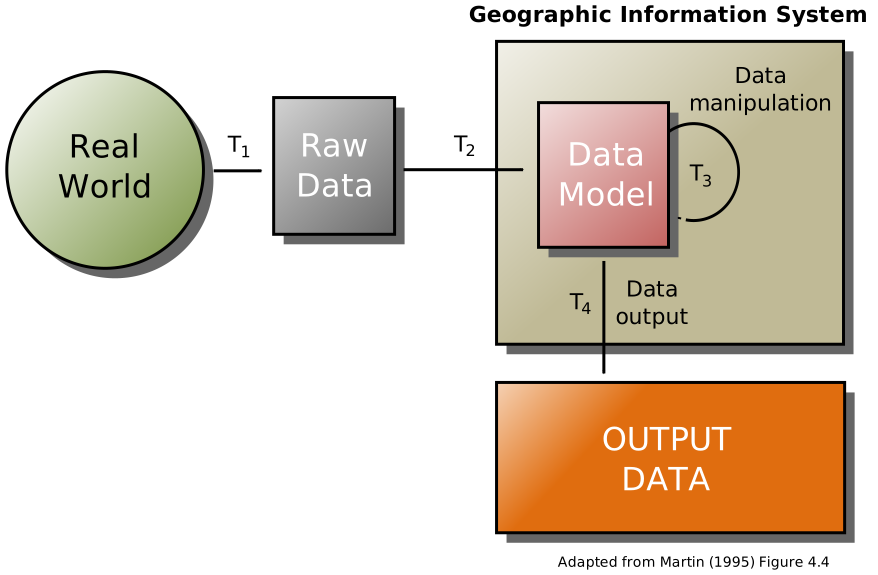
Geospatial information systems (GIS) are integrated computer hardware and software systems designed to store, manage, analyze, edit, output, and visualize geogr
Overview
Geospatial information systems (GIS) are integrated computer hardware and software systems designed to store, manage, analyze, edit, output, and visualize geographic data. This technology has revolutionized the field of geography, enabling the creation of detailed maps, spatial analysis, and data-driven decision-making. With applications in urban planning, environmental monitoring, emergency response, and more, GIS has become an essential tool for governments, businesses, and individuals alike. The industry and profession surrounding GIS are rapidly evolving, with advancements in cloud computing, artificial intelligence, and the Internet of Things (IoT) expanding the capabilities of these systems. As the world becomes increasingly interconnected, the importance of geospatial information systems will only continue to grow, with the global GIS market projected to reach $14.6 billion by 2025, according to a report by [[marketsandmarkets|MarketsandMarkets]]. The use of GIS in various fields, such as [[urban-planning|urban planning]] and [[environmental-monitoring|environmental monitoring]], has been instrumental in shaping the modern world, with companies like [[esri|Esri]] and [[google|Google]] playing a significant role in the development of GIS technology.