
Contents
- 🎵 Origins & History
- ⚙️ How It Works
- 📊 Key Facts & Numbers
- 👥 Key People & Organizations
- 🌍 Cultural Impact & Influence
- ⚡ Current State & Latest Developments
- 🤔 Controversies & Debates
- 🔮 Future Outlook & Predictions
- 💡 Practical Applications
- 📚 Related Topics & Deeper Reading
- Frequently Asked Questions
- References
- Related Topics
Overview
The concept of cellular enlargement as a driver of organ growth has roots stretching back to the earliest days of histology and cell theory. While the term 'hypertrophy' itself, derived from Greek 'hyper' (over) and 'trophe' (nourishment), gained traction in the 19th century, observations of enlarged organs were documented long before. Early pathologists like Rudolf Virchow in the mid-1800s, often hailed as the father of modern pathology, meticulously described cellular changes, including hypertrophy, as responses to disease and injury. His work at the Charité Hospital in Berlin laid the groundwork for understanding that cells, not just tissues, could change in size. The distinction between hypertrophy and hyperplasia became clearer as microscopy advanced, allowing scientists to differentiate between cell swelling and cell proliferation. This foundational understanding was crucial for later developments in fields like endocrinology and exercise physiology.
⚙️ How It Works
At its core, hypertrophy is driven by an increase in the synthesis of cellular proteins and organelles, without a corresponding increase in cell number. For skeletal muscle, this often involves the addition of new sarcomeres (the basic contractile units) and myofibrils, leading to a thicker muscle fiber. This process is triggered by mechanical stress, hormonal signals (like testosterone and growth hormone), and various growth factors. For example, resistance training imposes mechanical tension on muscle fibers, activating signaling pathways such as the mTOR pathway, which promotes protein synthesis. In cardiac muscle, hypertrophy can be a response to increased workload, such as in hypertension, where the heart muscle must pump against higher resistance. This cellular enlargement can be either concentric (adding layers to the inside of the cell) or eccentric (adding layers to the outside).
📊 Key Facts & Numbers
Skeletal muscle hypertrophy can lead to significant increases in muscle cross-sectional area, with studies showing increases of up to 60% in trained individuals over several months of consistent resistance training. For instance, a meta-analysis published in the Journal of Strength and Conditioning Research in 2017 indicated that average muscle hypertrophy in the range of 1-10% per decade is achievable with proper training. The heart, when hypertrophied pathologically, can increase its mass by 50% or more, as seen in conditions like hypertrophic cardiomyopathy. In pregnancy, uterine muscle cells can increase their volume by up to 1000 times their original size, a remarkable feat of cellular expansion. The global market for sports nutrition products, which often aim to support muscle hypertrophy, was valued at over $50 billion in 2022, underscoring the economic significance of this biological process.
👥 Key People & Organizations
Key figures in understanding hypertrophy include Rudolf Virchow, whose 19th-century work on cellular pathology provided foundational insights. In the realm of exercise science, researchers like W. D. McArdle and John Ivy have significantly contributed to our understanding of the physiological responses to training, including muscle hypertrophy. Organizations such as the American College of Sports Medicine and the National Strength and Conditioning Association are instrumental in disseminating research and setting guidelines related to training for hypertrophy. In clinical settings, cardiologists studying conditions like hypertrophic cardiomyopathy and endocrinologists investigating hormonal influences are central to the study of pathological and physiological hypertrophy, respectively. The National Institutes of Health also funds significant research into cellular growth and adaptation.
🌍 Cultural Impact & Influence
Hypertrophy has profoundly shaped our cultural understanding of physical development and athletic achievement. The visual ideal of a muscular physique, often associated with health, strength, and discipline, is largely a product of understanding and intentionally inducing skeletal muscle hypertrophy through weightlifting and bodybuilding. This pursuit is visible in the massive global fitness industry, the popularity of social media fitness influencers, and the widespread use of supplements marketed to enhance muscle growth. Beyond aesthetics, the concept of hypertrophy is woven into narratives of overcoming limitations and achieving peak physical condition, influencing everything from Hollywood action heroes to Olympic athletes. The medical understanding of hypertrophy also impacts public health discourse, particularly concerning cardiovascular health and the risks associated with uncontrolled cell growth in diseases like cancer.
⚡ Current State & Latest Developments
Current research is intensely focused on the molecular signaling pathways that regulate hypertrophy, aiming to differentiate between beneficial physiological hypertrophy and detrimental pathological hypertrophy. Scientists are exploring novel therapeutic targets to prevent or reverse pathological cardiac hypertrophy, a major risk factor for heart failure. In sports science, the debate continues regarding the optimal training protocols (volume, intensity, frequency) for maximizing hypertrophy in different populations, with recent studies from institutions like Baylor University investigating the role of training volume and exercise selection. Furthermore, advancements in gene editing technologies like CRISPR-Cas9 are opening new avenues for understanding and potentially manipulating cellular growth mechanisms, though ethical considerations are paramount.
🤔 Controversies & Debates
One of the primary debates surrounding hypertrophy centers on the distinction between physiological and pathological forms. While muscle hypertrophy from exercise is generally considered beneficial, cardiac hypertrophy due to conditions like aortic stenosis can lead to severe dysfunction and increased mortality. The question of whether there's a genetic ceiling to human muscle hypertrophy is also a recurring discussion, with some researchers suggesting that while training can maximize potential, inherent genetic factors play a significant role in determining an individual's ultimate capacity for muscle growth. Another area of contention involves the efficacy and safety of various ergogenic aids and performance-enhancing drugs, such as anabolic steroids, which can artificially induce hypertrophy but carry substantial health risks, as documented by organizations like the World Anti-Doping Agency.
🔮 Future Outlook & Predictions
The future of hypertrophy research likely lies in precision medicine and targeted interventions. For pathological hypertrophy, expect the development of drugs that specifically inhibit maladaptive signaling pathways in the heart or other organs, potentially reversing or halting disease progression. In the context of muscle growth, advancements in understanding cellular mechanics and nutrient signaling could lead to even more optimized training and nutritional strategies, possibly aided by AI-driven personalized fitness plans. There's also growing interest in understanding how to promote beneficial hypertrophy in aging populations to combat sarcopenia (age-related muscle loss). Furthermore, the potential for using stem cell therapy to repair or regenerate muscle tissue, leveraging hypertrophy-like mechanisms, remains a significant area of exploration.
💡 Practical Applications
The most prominent practical application of understanding hypertrophy is in strength and conditioning for athletes and the general population. Tailored resistance training programs are designed to stimulate muscle hypertrophy, leading to increased strength, power, and improved body composition. In clinical settings, managing pathological hypertrophy is crucial. For cardiac hypertrophy, treatments aim to reduce the workload on the heart through medications like beta-blockers or ACE inhibitors, or surgical interventions for conditions like hypertrophic cardiomyopathy. Understanding uterine hypertrophy is essential for managing pregnancy and labor. Research into hypertrophy also informs strategies for tissue engineering and regenerative medicine, aiming to rebuild damaged tissues by promoting controlled cellular growth.
Key Facts
- Year
- 19th century (term formalized)
- Origin
- Ancient Greek / Global
- Category
- science
- Type
- concept
Frequently Asked Questions
What is the fundamental difference between hypertrophy and hyperplasia?
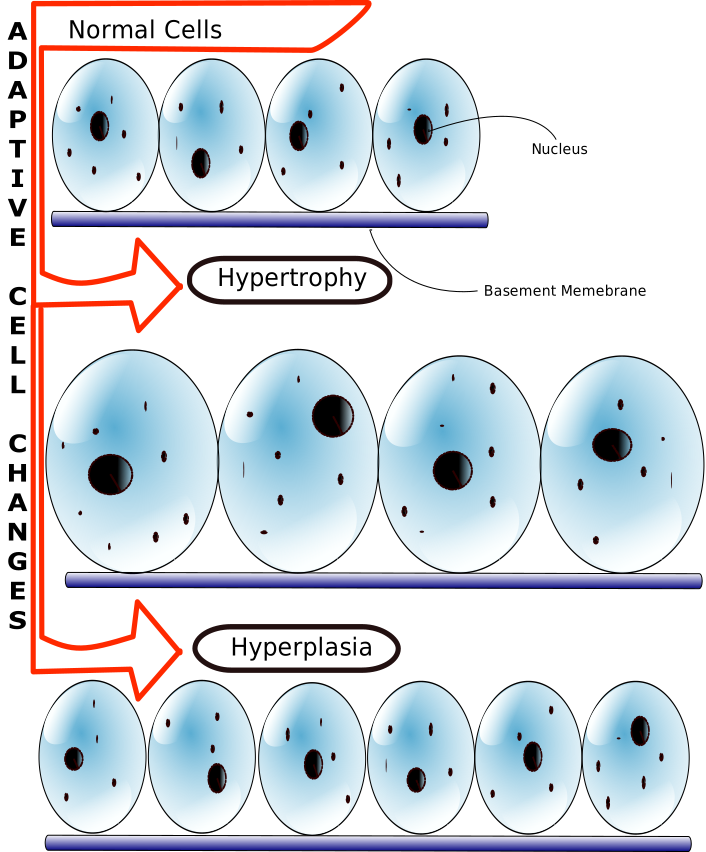
Hypertrophy is an increase in the size of individual cells, leading to an enlargement of the tissue or organ. Hyperplasia, on the other hand, is an increase in the number of cells within a tissue or organ. While both contribute to growth, they are distinct cellular processes. For example, skeletal muscle primarily grows through hypertrophy in response to training, whereas the skin might exhibit hyperplasia when healing from a wound by increasing cell numbers.
How does exercise cause muscle hypertrophy?
Resistance exercise, such as weightlifting, causes microscopic damage and mechanical tension in muscle fibers. This stress triggers a cascade of cellular signaling events, most notably involving the mTOR pathway. These signals promote increased protein synthesis within the muscle cells, leading to the addition of new contractile proteins and organelles like myofibrils. Over time, this accumulation of cellular components results in larger, thicker muscle fibers, which is the hallmark of skeletal muscle hypertrophy.
Is hypertrophy always a good thing?
No, hypertrophy can be either physiological (beneficial) or pathological (harmful). Physiological hypertrophy occurs in response to stimuli like exercise (muscle growth) or pregnancy (uterine expansion), leading to improved function. Pathological hypertrophy, however, is often a maladaptive response to chronic stress, such as in the heart due to conditions like hypertension or aortic stenosis. This pathological enlargement can impair organ function, leading to conditions like heart failure and increasing the risk of serious health problems.
What are the main hormones involved in hypertrophy?
Several hormones play significant roles in promoting hypertrophy, particularly in skeletal muscle. Testosterone is a primary anabolic hormone that stimulates protein synthesis and inhibits muscle breakdown. Growth hormone (GH) and Insulin-like Growth Factor 1 (IGF-1) are also crucial, promoting cell growth and proliferation. Insulin, while primarily known for glucose regulation, also has anabolic effects that can contribute to hypertrophy by enhancing nutrient uptake and protein synthesis.
Can hypertrophy occur in organs other than muscles?
Yes, hypertrophy can occur in virtually any organ or tissue in the body. A classic example is the uterus during pregnancy, where the smooth muscle cells significantly increase in size to accommodate the growing fetus. The heart muscle (myocardium) is another common site for hypertrophy, often as a response to increased workload or disease. Even organs like the kidneys can exhibit hypertrophy in response to damage or increased functional demand on the remaining nephrons.
How can I maximize muscle hypertrophy through training?
To maximize muscle hypertrophy, a combination of factors is generally recommended. This includes progressive resistance training that consistently challenges the muscles, typically involving moderate to heavy weights (e.g., 6-12 repetitions per set) taken close to muscular failure. Adequate protein intake is essential to provide the building blocks for new muscle tissue, with recommendations often around 1.6-2.2 grams per kilogram of body weight per day. Sufficient rest and recovery are also critical, as muscle growth primarily occurs during periods of rest, not during the workout itself. Sleep quality is paramount for hormonal balance and tissue repair.
What are the latest research trends in hypertrophy?
Current research is heavily focused on unraveling the intricate molecular signaling pathways that govern hypertrophy, aiming to differentiate between beneficial and harmful forms. This includes investigating the roles of autophagy, myokines, and epigenetics in muscle adaptation. There's also significant interest in developing targeted therapies to prevent or reverse pathological hypertrophy in organs like the heart, as well as exploring how to optimize hypertrophy for aging populations to combat sarcopenia. The use of advanced imaging techniques and computational modeling is also accelerating discoveries in the field.