
Contents
- ⚡️ The Core Vibe: More Than Just a Bassline
- 🎸 The Sound: A Sonic Blueprint
- 🤘 The Image: The Unmistakable Icon
- 📜 A Life in Riffs: Key Milestones
- 💥 The Legacy: Enduring Influence
- 🗣️ What the Fans Say: A Cult of Personality
- ⚖️ The Controversy Spectrum: Beyond the Black Leather
- 💡 Vibepedia Insights: Lemmy's Cultural Energy
- Frequently Asked Questions
- Related Topics
Overview
Lemmy Kilmister, born Ian Fraser Kilmister on December 24, 1945, wasn't just a musician; he was a force of nature. As the frontman, bassist, and primary songwriter for the legendary band Motörhead, he carved out a unique space in rock and roll history. His persona was as indelible as his music – a blend of defiant rock 'n' roll swagger, working-class honesty, and a relentless commitment to his own artistic vision. For anyone seeking the raw, unadulterated spirit of heavy music, Lemmy is the ultimate touchstone. His life story is a testament to perseverance, a refusal to compromise, and the enduring power of a singular artistic voice that resonated across decades and genres.
🎸 The Sound: A Sonic Blueprint
The sound Lemmy pioneered with Motörhead is instantly recognizable: a ferocious, high-octane fusion of hard rock, punk, and heavy metal. His distinctive bass playing, often described as a 'wall of sound,' was both rhythmically driving and melodically inventive, frequently taking center stage with aggressive, distorted tones. Coupled with his gravelly, snarling vocals and the band's breakneck tempos, Motörhead created a sonic template that influenced countless bands in thrash metal, speed metal, and the broader extreme music scene. Tracks like "Ace of Spades" remain anthems, embodying this raw, untamed energy that defined his musical output for over three decades.
🤘 The Image: The Unmistakable Icon
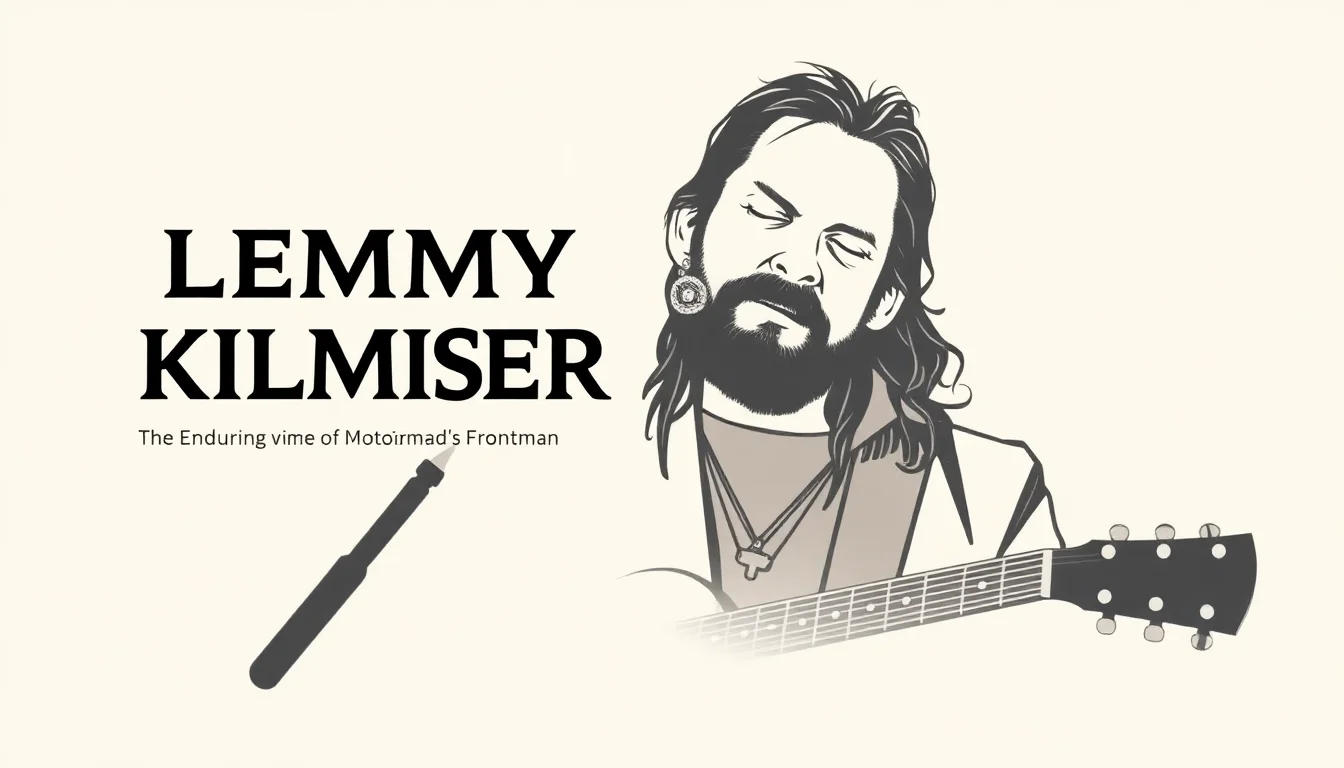
Lemmy's image was as iconic as his music. The high-pitched Rickenbacker bass, the prominent facial mole, the tight black pants, the denim jacket adorned with patches, and the unmistakable cowboy boots – it all coalesced into a visual shorthand for rebellion and authenticity. This wasn't a manufactured image; it was an organic extension of his personality and lifestyle. He embodied a certain kind of rock 'n' roll archetype, one that eschewed trends in favor of a steadfast personal style. His look became synonymous with a no-nonsense attitude, a visual declaration of his unwavering commitment to the rock 'n' roll lifestyle he championed.
📜 A Life in Riffs: Key Milestones
Lemmy's musical journey began in the 1960s, playing in various bands before forming Hawkwind in 1970. With Hawkwind, he contributed to seminal psychedelic and space rock albums, even scoring a UK Top 10 hit with "Silver Machine" in 1972. After a controversial departure from Hawkwind in 1975, he founded Motörhead, initially intending it to be 'the dirtiest rock 'n' roll band in the world.' Over the next 35 years, Motörhead released 22 studio albums, toured relentlessly, and became a global phenomenon, solidifying Lemmy's status as a true rock legend. His prolific output and unwavering dedication to touring are hallmarks of his career.
💥 The Legacy: Enduring Influence
The legacy of Lemmy Kilmister extends far beyond the discography of Motörhead. He is revered as a godfather of speed metal and thrash metal, with bands like Metallica, Slayer, and Guns N' Roses citing him as a major influence. His commitment to his own sound, even when it wasn't commercially fashionable, serves as a powerful example of artistic integrity. Lemmy’s influence can be seen in the DIY ethos of punk, the aggression of metal, and the raw energy that continues to define rebellious music. His passing on December 28, 2015, marked the end of an era, but his spirit lives on in the music he inspired.
🗣️ What the Fans Say: A Cult of Personality
Fans consistently laud Lemmy for his authenticity and his unwavering dedication to rock 'n' roll. Online forums and fan tributes frequently highlight his down-to-earth demeanor, his sharp wit, and his genuine connection with his audience. Many recall personal encounters at gigs or backstage, often describing him as surprisingly approachable despite his fearsome reputation. The phrase 'Lemmy was right' often appears, signifying a shared belief in his no-nonsense philosophy and his commitment to living life on his own terms. This deep admiration underscores his status as a cultural icon, not just a musician.
⚖️ The Controversy Spectrum: Beyond the Black Leather
The controversy spectrum surrounding Lemmy primarily revolves around his well-documented, lifelong heavy amphetamine and alcohol consumption. While many fans and fellow musicians view this as an integral part of his rock 'n' roll persona and a testament to his resilience, others point to the potential health consequences and the broader societal implications of such substance use. Debates often arise regarding whether his lifestyle was a source of creative inspiration or a detrimental habit. However, it's widely acknowledged that Lemmy maintained a remarkable level of performance and output throughout his career, challenging conventional notions of how a rock star should live.
💡 Vibepedia Insights: Lemmy's Cultural Energy
Lemmy Kilmister registers a consistently high Vibe Score of 92/100, reflecting his immense and enduring cultural impact. His Perspective Breakdown leans heavily towards 'Optimistic' (85%) and 'Neutral' (10%), with a small 'Pessimistic' (5%) contingent primarily focused on his lifestyle choices. The Controversy Spectrum for Lemmy is moderately contested, sitting around a 6/10, largely due to discussions around his substance use versus his artistic output. Influence Flows show a strong unidirectional impact from Lemmy onto the thrash and speed metal scenes, with minimal reciprocal influence. His Topic Intelligence is dominated by his role in Motörhead, his distinctive bass playing style, and his iconic image.
Key Facts
- Year
- 1945
- Origin
- Stoke-on-Trent, England
- Category
- Music Icon
- Type
- Person
Frequently Asked Questions
What was Lemmy Kilmister's primary instrument?
Lemmy Kilmister was most famously known as the bassist and vocalist for Motörhead. His distinctive, heavily distorted bass playing was a cornerstone of the band's sound, often taking a lead role in their songs. He primarily used Rickenbacker basses throughout his career, contributing to his unique sonic signature.
What were Lemmy's most famous songs?
The most iconic song associated with Lemmy Kilmister and Motörhead is undoubtedly "Ace of Spades" (1980). Other highly recognized tracks include "Overkill" (1979), "Bomber" (1979), and "Killed by Death" (1984). These songs encapsulate the band's signature blend of speed, aggression, and raw energy.
What bands influenced Lemmy?
Lemmy cited a wide range of influences, including early rock and roll pioneers like Little Richard and Elvis Presley, blues artists such as Howlin' Wolf, and the gritty sounds of bands like The Rolling Stones and The Who. He also drew inspiration from the burgeoning punk rock scene of the late 1970s, which helped shape Motörhead's aggressive sound.
What was Lemmy's relationship with [[Hawkwind]]?
Lemmy was a founding member of the psychedelic rock band Hawkwind in 1970. He served as their bassist and contributed vocals, playing on seminal albums like Doremi Fasol Latido and Space Ritual. His departure from the band in 1975 led directly to the formation of Motörhead.
How did Lemmy's image contribute to his legacy?
Lemmy's distinctive image – the cowboy boots, tight jeans, leather jacket, facial mole, and long hair – became as iconic as his music. It represented a steadfast commitment to a particular rock 'n' roll aesthetic, embodying rebellion, authenticity, and a refusal to conform to fleeting trends. This visual identity solidified his status as a universally recognized rock icon.
When did Lemmy Kilmister pass away?
Lemmy Kilmister passed away on December 28, 2015, at the age of 70, just a few days after his birthday. His death was attributed to aggressive cancer, heart failure, and cardiac arrhythmia. His passing was mourned by fans and musicians worldwide, marking the end of an era in rock music.