
Contents
- 🎵 Origins & History
- ⚙️ How It Works
- 📊 Key Facts & Numbers
- 👥 Key People & Organizations
- 🌍 Cultural Impact & Influence
- ⚡ Current State & Latest Developments
- 🤔 Controversies & Debates
- 🔮 Future Outlook & Predictions
- 💡 Practical Applications
- 📚 Related Topics & Deeper Reading
- Frequently Asked Questions
- References
- Related Topics
Overview
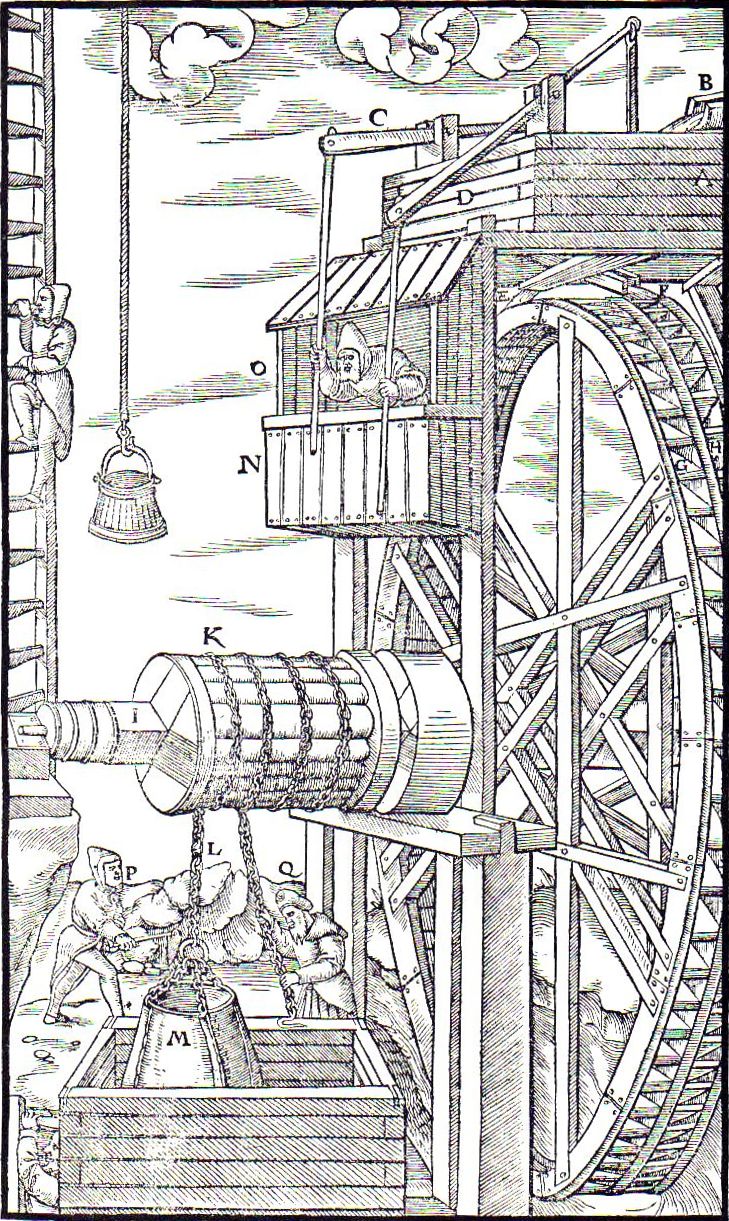
The story of mechanization begins not with steam engines, but with the very first tools wielded by hominids, perhaps as early as 2.6 million years ago with the Oldowan stone tools found in Ethiopia. These rudimentary implements, like the chopper and scraper, represented a nascent form of mechanization by extending human capability beyond bare hands. The Neolithic Revolution, commencing around 10,000 BCE, saw significant mechanization in agriculture with the invention of the plow and irrigation systems, allowing for settled societies and surplus food production. Ancient civilizations like Mesopotamia and Ancient Egypt further developed mechanization through water wheels and sophisticated architectural tools. The Hellenistic period gifted us Archimedes' screw and early mechanical calculators, while the Roman Empire's extensive use of aqueducts and road construction techniques showcased large-scale engineering. The medieval era saw the widespread adoption of the windmill and watermill, powering everything from grain grinding to early manufacturing, laying crucial groundwork for the Industrial Revolution.
⚙️ How It Works
At its core, mechanization involves interposing a machine between a power source and the work to be done. This adaptation can take many forms: increasing force, altering speed, changing motion from rotary to linear or vice-versa, or performing repetitive tasks with greater precision than humans. Early machines, like the lever and pulley, leverage mechanical advantage. More complex systems, such as those developed during the Industrial Revolution, utilize steam engines as prime movers, driving intricate networks of gears, belts, and shafts to power looms, lathes, and eventually, vehicles. Modern mechanization often involves hydraulics, pneumatics, and electric motors, controlled by PLCs and CNC systems, enabling highly precise and automated operations. The fundamental principle remains: to harness and direct energy more effectively to accomplish a task.
📊 Key Facts & Numbers
The impact of mechanization is quantifiable on a massive scale. Between 1770 and 1840, the British textile industry saw productivity gains of over 300% due to mechanization like the spinning jenny and power loom. By 1900, the United States produced over 100,000 automobiles, a feat impossible without assembly line mechanization pioneered by Henry Ford and Ford Motor Company. Globally, agricultural mechanization has reduced the percentage of the workforce in farming from over 70% in many nations in 1950 to under 5% today, with countries like the United States and Brazil leading in mechanized farming output. The global industrial automation market was valued at approximately $200 billion in 2023 and is projected to grow significantly, with robotics alone accounting for over $50 billion in 2022. The energy required to power this mechanization has also surged, with global primary energy consumption reaching over 600 exajoules annually.
👥 Key People & Organizations
Key figures in the history of mechanization include James Watt, whose improvements to the steam engine in the 1770s became a cornerstone of the Industrial Revolution. Eli Whitney, known for his invention of the cotton gin and pioneering the concept of interchangeable parts, revolutionized manufacturing in the late 18th century. Henry Ford's implementation of the moving assembly line at Ford Motor Company in 1913 drastically reduced automobile production times and costs. In the 20th century, Norbert Wiener's work on cybernetics laid theoretical groundwork for automated control systems. Organizations like the International Federation of Robotics (IFR) track and promote advancements in industrial automation, while bodies like the International Organization for Standardization (ISO) develop standards for machinery safety and interoperability. The development of artificial intelligence by companies like Google and OpenAI is now pushing the boundaries of what machines can do.
🌍 Cultural Impact & Influence
Mechanization has been a primary driver of societal change, fundamentally altering labor, urbanization, and living standards. The shift from agrarian to industrial economies, fueled by mechanization, led to mass migration to cities and the rise of the factory system, as seen in 19th-century Manchester and New York City. It created new classes of industrial workers and entrepreneurs, as chronicled by authors like Charles Dickens and Émile Zola. The increased productivity enabled by mechanization has led to unprecedented wealth creation and a general rise in material living standards for large segments of the global population, though often accompanied by significant social disruption. Mechanization in warfare, from early artillery to modern drone warfare, has also dramatically reshaped geopolitical power dynamics. The cultural resonance is evident in art, literature, and film, from Fritz Lang's Metropolis to the ongoing fascination with robotics and AI.
⚡ Current State & Latest Developments
The current era is characterized by the rapid advancement and integration of robotics, AI, and IoT technologies, pushing mechanization into new frontiers. Collaborative robots, or cobots, are increasingly working alongside humans in manufacturing and logistics, exemplified by companies like Universal Robots. AI is enabling machines to perform tasks requiring judgment and learning, such as in autonomous vehicles developed by Tesla and Waymo, or advanced diagnostic tools in medical imaging. The digital twin concept allows for virtual replication and optimization of mechanized systems before physical deployment. Furthermore, the push towards Industry 4.0 emphasizes smart factories where interconnected machines and systems communicate and cooperate autonomously. The development of quantum computing also holds potential for revolutionizing complex simulations and optimization problems within mechanized systems.
🤔 Controversies & Debates
Mechanization is not without its controversies. The most persistent debate revolves around job displacement and the future of work, as automation threatens to render many human jobs obsolete, particularly in manufacturing, transportation, and customer service sectors. This raises concerns about widening income inequality and the need for robust social safety nets and retraining programs. Ethical considerations surrounding autonomous weapons and the potential for misuse of advanced automated systems are also significant. Critics question the environmental impact of increased energy consumption required for widespread mechanization and the disposal of electronic waste. Furthermore, the concentration of technological power in the hands of a few large corporations, such as Amazon and Alphabet Inc., raises concerns about monopolies and equitable access to the benefits of mechanization.
🔮 Future Outlook & Predictions
The future of mechanization points towards increasingly sophisticated and integrated automated systems. We can anticipate a significant rise in autonomous systems across all sectors, from agriculture (e.g., John Deere's autonomous tractors) to healthcare (e.g., robotic surgery). The fusion of AI with robotics will lead to machines capable of more complex problem-solving and adaptation. Bio-integrated robotics and nanotechnology may enable machines to operate at cellular or molecular levels for medical treatments or advanced manufacturing. The concept of the singularity, a hypothetical point where artificial superintelligence surpasses human intellect, represents an extreme, albeit speculative, future outcome of advanced mechanization. The ongoing development of 5G and future wireless technologies will further enable seamless connectivity and control of vast networks of mechanized devices.
💡 Practical Applications
Mechanization's practical applications are ubiquitous. In manufacturing, robots perform welding, assembly, and painting with unparalleled speed and precision. Agriculture relies on tractors, harvesters, and automated irrigation systems to feed a growing global population. In logistics and transportation, automated warehouses managed by Kiva Systems (now Amazon Robotics) and self-driving vehicles are transforming supply chains. Healthcare utilizes robotic surgical systems like the Da Vinci Surgical System for minimally invasive procedures and automated laboratory equipment for diagnostics. Construction employs heavy machinery like excavators and cranes, with increasing automation in areas like bricklaying and 3D printing of buildings. Even in everyday life, mechanization is evident in washing machines, dishwashers, and the complex systems powering our smartphones and computers.
Key Facts
- Year
- c. 2.6 million BCE - Present
- Origin
- Global
- Category
- technology
- Type
- concept
Frequently Asked Questions
What is the earliest example of mechanization?
The earliest evidence of mechanization dates back to approximately 2.6 million years ago with the creation of Oldowan stone tools, such as choppers and scrapers, by early hominids. These tools extended the capabilities of human hands, representing a fundamental step in using external objects to perform tasks more effectively. This predates more complex machines by millennia and signifies the very genesis of using manufactured implements to augment natural abilities, a core principle of mechanization.
How did mechanization lead to the Industrial Revolution?
Mechanization was the engine of the Industrial Revolution. Innovations like the spinning jenny, power loom, and crucially, the steam engine perfected by James Watt, allowed for production on an unprecedented scale. These machines, powered by new energy sources, moved manufacturing from homes to factories, drastically increasing output and efficiency. This shift fundamentally altered economies, leading to mass production, urbanization, and the rise of industrial capitalism, transforming societies from agrarian to industrial.
What is the difference between mechanization and automation?
Mechanization is the broader concept of using machinery to perform tasks previously done by hand or animal power. Automation is a more advanced form of mechanization where machines operate with minimal or no human intervention, often incorporating control systems, sensors, and AI. While a tractor is an example of mechanization, a self-driving tractor that navigates fields and optimizes planting without a human operator is an example of automation. Automation builds upon the foundation laid by mechanization.
What are the main societal impacts of widespread mechanization?
Widespread mechanization has led to dramatic societal shifts, including significant job displacement in traditional sectors, the rise of new industries and job categories, and increased income inequality. It has fueled urbanization by concentrating production in factories, altered family structures, and led to unprecedented increases in productivity and material wealth for many. However, it also raises concerns about worker exploitation, environmental degradation from increased resource consumption, and the concentration of economic power. The overall impact is a complex mix of progress and challenges.
How does mechanization affect developing countries?
In developing countries, mechanization can be a double-edged sword. It offers the potential to boost agricultural productivity, improve infrastructure development, and foster industrial growth, thereby increasing living standards. However, it can also lead to significant job losses in labor-intensive sectors if not managed carefully, potentially exacerbating poverty and social unrest. Access to capital for acquiring machinery and the need for skilled labor to operate and maintain it are significant barriers. International aid and technology transfer play crucial roles in how developing nations navigate mechanization.
What are the ethical concerns surrounding advanced mechanization like AI and robotics?
Advanced mechanization, particularly involving AI and robotics, raises profound ethical concerns. These include the potential for widespread job displacement and the resulting economic disruption, the development of autonomous weapons capable of making life-or-death decisions without human oversight, issues of bias embedded in AI algorithms leading to discriminatory outcomes, and questions of accountability when automated systems cause harm. There are also debates about the potential for superintelligence to pose existential risks to humanity.
What is the future outlook for mechanization in the next decade?
The next decade will likely see an acceleration of mechanization driven by AI, advanced robotics, and the IoT. Expect significant growth in cobots working alongside humans, widespread adoption of autonomous vehicles in logistics and transportation, and increased automation in sectors like healthcare and agriculture. Edge computing will enable more real-time decision-making by machines. The focus will increasingly shift from simple task replacement to machines capable of learning, adapting, and collaborating, pushing the boundaries of what is currently considered possible.