
Contents
- 🎵 Origins & History
- ⚙️ How It Works
- 📊 Key Facts & Numbers
- 👥 Key People & Organizations
- 🌍 Cultural Impact & Influence
- ⚡ Current State & Latest Developments
- 🤔 Controversies & Debates
- 🔮 Future Outlook & Predictions
- 💡 Practical Applications
- 📚 Related Topics & Deeper Reading
- Frequently Asked Questions
- References
- Related Topics
Overview
The story of photovoltaics begins not with electricity, but with light itself. In 1839, French physicist Edmund Becquerel first observed the photovoltaic effect while experimenting with electrolytic cells, noting that light produced a voltage. Decades later, in 1873, Willoughby Smith discovered the photoconductivity of selenium, a crucial step toward solid-state devices. However, it was Charles Fritts who, in 1883, created the first solar cell by coating selenium with a thin layer of gold, achieving an efficiency of less than 1%. The true breakthrough came in 1905 when Albert Einstein explained the photoelectric effect, laying the theoretical groundwork for understanding how light quanta (photons) could liberate electrons. This theoretical leap, for which he won the Nobel Prize, paved the way for practical applications, though the first silicon solar cell wouldn't emerge until 1954, developed by scientists at Bell Laboratories including Gerald Pearson, Daryl Chapin, and Calvin Fuller.
⚙️ How It Works
At its heart, photovoltaic conversion relies on the properties of semiconductor materials, most commonly silicon. When photons from sunlight strike a solar cell, they excite electrons within the semiconductor's atomic structure, knocking them loose from their bonds. This creates electron-hole pairs. A carefully engineered internal electric field, typically created by doping the semiconductor with different impurities (e.g., creating a p-n junction), forces these liberated electrons to flow in a specific direction. This directed flow of electrons constitutes an electric current. The solar cell is designed with conductive contacts to collect this current, which can then be used directly as direct current (DC) electricity or converted to alternating current (AC) for grid integration or powering standard appliances using an inverter.
📊 Key Facts & Numbers
The scale of solar photovoltaic deployment is staggering. As of early 2024, global installed solar PV capacity has surpassed 1 terawatt (1,000 gigawatts), a monumental leap from just 40 gigawatts in 2010. China leads the world in installed capacity, with over 600 gigawatts. The cost of solar PV has plummeted by over 80% in the last decade, making it one of the cheapest sources of new electricity generation in many regions. A typical residential solar panel system might generate between 3 to 10 kilowatts (kW), while utility-scale solar farms can range from tens to hundreds of megawatts (MW), with some exceeding 1 gigawatt. The efficiency of commercially available silicon solar panels typically ranges from 17% to 22%, though laboratory records push beyond 26%.
👥 Key People & Organizations
While Albert Einstein provided the theoretical bedrock, the practical realization of the solar cell owes much to the team at Bell Laboratories – Gerald Pearson, Daryl Chapin, and Calvin Fuller – who developed the first efficient silicon solar cell in 1954. Charles Fritts deserves credit for the very first, albeit inefficient, solar cell in 1883. In the modern era, Elon Musk's Tesla has become a significant player not just in electric vehicles but also in solar energy through its Solar Roof and Powerwall products. Organizations like the International Energy Agency (IEA) and the International Renewable Energy Agency (IRENA) are critical in tracking and promoting global PV deployment. Companies like JinkoSolar, LONGi, and First Solar are among the world's largest manufacturers of solar panels.
🌍 Cultural Impact & Influence
Photovoltaics has profoundly reshaped global energy discourse and infrastructure. It's no longer a niche technology but a mainstream power source, driving down carbon emissions and challenging the dominance of fossil fuels. The visual presence of solar panels on rooftops and in vast arrays has become a common sight, symbolizing a shift towards sustainability. PV technology has spurred innovation in related fields, such as battery storage and smart grid management. Culturally, it represents a tangible connection to renewable energy, empowering individuals and communities to generate their own power and participate directly in the energy transition. The narrative has shifted from a distant, theoretical solution to an immediate, practical reality impacting economies and environments worldwide.
⚡ Current State & Latest Developments
The solar PV sector is experiencing unprecedented growth and innovation. In 2023, the world added a record 390 gigawatts of solar PV capacity, a nearly 50% increase from 2022, according to the IEA. This surge is driven by falling costs, supportive government policies, and increasing corporate demand for clean energy. Innovations are focusing on higher efficiency cells, such as perovskite and tandem cells, which combine different materials to capture a broader spectrum of sunlight. Manufacturing is also becoming more automated and efficient, with advancements in areas like bifacial panels that capture light from both sides. The integration of PV with electric vehicles and building-integrated photovoltaics is also gaining traction.
🤔 Controversies & Debates
Despite its successes, photovoltaics faces significant debates. The primary controversy revolves around the energy transition's pace and the role of PV versus other renewables like wind power and nuclear energy. Critics point to the intermittency of solar power, requiring substantial battery storage or grid upgrades to ensure reliability, which adds to the overall cost. Land use for large-scale solar farms is another point of contention, raising concerns about habitat disruption and competition with agriculture. Furthermore, the supply chain for solar panels, particularly the reliance on specific materials and manufacturing concentrated in certain regions like China, raises geopolitical and ethical questions regarding labor practices and environmental impacts of raw material extraction and panel disposal. The debate over the true lifecycle carbon footprint, including manufacturing and disposal, is ongoing.
🔮 Future Outlook & Predictions
The future of photovoltaics is exceptionally bright, though not without challenges. Projections suggest that solar PV will continue to be the fastest-growing energy source globally, potentially accounting for over 50% of new electricity generation capacity additions annually for the next decade. Experts anticipate further cost reductions and efficiency gains, with tandem solar cells and emerging perovskite technologies promising to push efficiencies well beyond current silicon limits, potentially reaching 30-40%. The integration of PV into everyday infrastructure, from roads and windows to clothing, will likely become more commonplace. Challenges remain in grid modernization, ensuring sufficient energy storage solutions, and developing robust recycling processes for end-of-life panels to create a truly circular economy for solar technology. The geopolitical landscape of manufacturing and material sourcing will also continue to shape its trajectory.
💡 Practical Applications
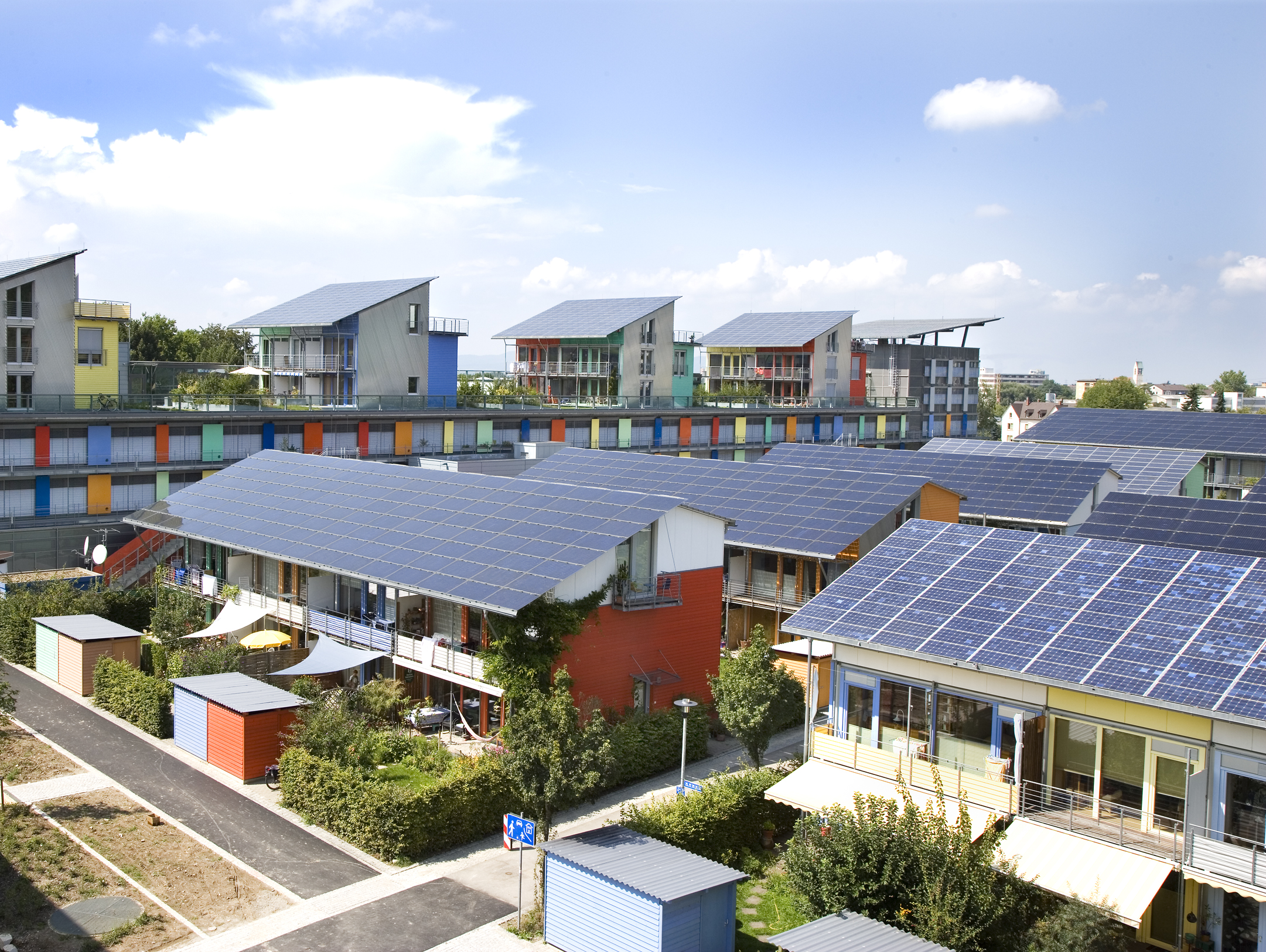
Photovoltaics has a vast array of practical applications. The most prominent is utility-scale electricity generation, powering entire cities and industrial complexes through massive solar farms. Residential and commercial rooftop installations provide electricity for homes and businesses, often feeding surplus power back to the grid. Off-grid applications are crucial in remote areas lacking traditional grid access, powering everything from telecommunications towers and water pumps to individual households. PV is also integrated into consumer electronics like calculators and garden lights, and increasingly into electric vehicles and building materials (BIPV). Its use in space exploration, powering satellites and space probes since the Sputnik era, remains a critical application where its reliability and independence from fuel are paramount.
Key Facts
- Year
- 1839 (observation of effect) - Present
- Origin
- France (observation of effect), United States (practical development)
- Category
- technology
- Type
- technology
Frequently Asked Questions
What is the basic principle behind how solar panels generate electricity?
Solar panels work using the photovoltaic effect. When sunlight (photons) strikes semiconductor material, typically silicon, within a solar cell, it excites electrons. These freed electrons are then directed by an internal electric field to flow in a specific direction, creating an electric current. This direct current (DC) can then be used or converted to alternating current (AC) by an inverter for use in homes and grids. The efficiency of this conversion is a key metric, with commercial panels typically converting 17-22% of sunlight into electricity.
How much has the cost of solar panels decreased over time?
The cost of solar photovoltaic technology has seen a dramatic reduction, making it one of the most affordable sources of new electricity generation. Over the past decade, the cost of solar PV has fallen by more than 80%. This steep decline is attributed to advancements in manufacturing processes, economies of scale, and increased global production, particularly by companies like JinkoSolar and LONGi. This cost-effectiveness is a primary driver for the rapid global adoption of solar energy.
What are the main environmental benefits of using photovoltaics?
The primary environmental benefit of photovoltaics is its role in mitigating climate change. Once installed, solar PV systems generate electricity with zero greenhouse gas emissions, unlike fossil fuel power plants which release significant amounts of carbon dioxide and other pollutants. This makes solar energy a critical tool for decarbonizing the electricity sector. Furthermore, solar PV does not produce air or water pollution during operation, contributing to cleaner air and water resources. Its scalability allows for deployment at both small and large scales, facilitating a transition to a more sustainable energy future.
What are the biggest challenges facing the widespread adoption of solar PV?
The most significant challenge for solar PV is its intermittency; electricity is only generated when the sun is shining. This requires robust energy storage solutions, such as lithium-ion batteries, to provide power when sunlight is unavailable, which adds to the overall system cost. Land use for large solar farms can also be a concern, leading to debates about competition with agriculture and impacts on ecosystems. Additionally, the global supply chain for solar panels, heavily concentrated in certain regions, raises questions about geopolitical dependencies, material sourcing ethics, and end-of-life panel recycling.
What is the difference between a solar cell, a solar module, and a solar PV system?
A solar cell is the fundamental unit that converts light into electricity using the photovoltaic effect. Multiple solar cells are interconnected and encapsulated to form a solar module, commonly known as a solar panel. A solar PV system is a complete installation that includes one or more solar modules, along with other components like an inverter (to convert DC to AC), mounting hardware, wiring, and sometimes battery storage, all working together to generate and deliver electricity.
How can I determine if installing solar panels on my home is a good idea?
To determine if home solar panels are suitable, assess your roof's condition, orientation (south-facing is ideal in the Northern Hemisphere), and shading. Calculate your average monthly electricity consumption from utility bills. Research local incentives, tax credits, and net metering policies, which can significantly impact the return on investment. Obtain quotes from multiple reputable solar installers to compare costs, equipment (panel efficiency, inverter type), warranties, and projected energy savings. Consider consulting with a solar professional who can perform a site assessment and provide a detailed financial analysis, often factoring in the lifespan of panels (typically 25-30 years) and potential increases in electricity prices.
What are the newest advancements in solar cell technology?
Cutting-edge research is pushing solar cell efficiency and versatility. Perovskite materials are showing immense promise due to their low manufacturing cost and rapidly improving efficiencies, often explored in tandem with silicon to capture a wider light spectrum. Tandem cells, which stack different semiconductor materials, are breaking efficiency records by utilizing more of the sun's energy. Innovations also include bifacial panels that capture light from both sides, and advancements in thin-film technologies that offer flexibility and lighter weight for applications like building-integrated photovoltaics (BIPV).