
Contents
- 🎵 Origins & History
- ⚙️ How It Works
- 📊 Key Facts & Numbers
- 👥 Key People & Organizations
- 🌍 Cultural Impact & Influence
- ⚡ Current State & Latest Developments
- 🤔 Controversies & Debates
- 🔮 Future Outlook & Predictions
- 💡 Practical Applications
- 📚 Related Topics & Deeper Reading
- Frequently Asked Questions
- References
- Related Topics
Overview
The origins of Qi Gong are deeply interwoven with the fabric of ancient Chinese civilization, stretching back thousands of years. Early forms can be traced to shamanistic rituals and agricultural practices aimed at harmonizing with nature and ensuring prosperity, with evidence suggesting practices akin to Qi Gong existed as far back as the Neolithic period (c. 10,000–2,000 BCE). The development of Traditional Chinese Medicine (TCM) in the Han Dynasty (206 BCE–220 CE) provided a theoretical framework for understanding qi, solidifying practices like Daoyin (a precursor to Qi Gong) as methods for health cultivation. Philosophical texts such as the I Ching and Tao Te Ching also laid groundwork for the mind-body integration central to Qi Gong. Over centuries, various schools and styles emerged, including those associated with Buddhist and Taoist monasteries, and martial arts lineages like Shaolin Kung Fu, each contributing to the rich diversity of Qi Gong practices seen today. The term 'Qi Gong' itself was popularized in the mid-20th century, notably by figures like Liu Guangsheng and Hu Xiaochen, to categorize these diverse practices under a unified banner.
⚙️ How It Works
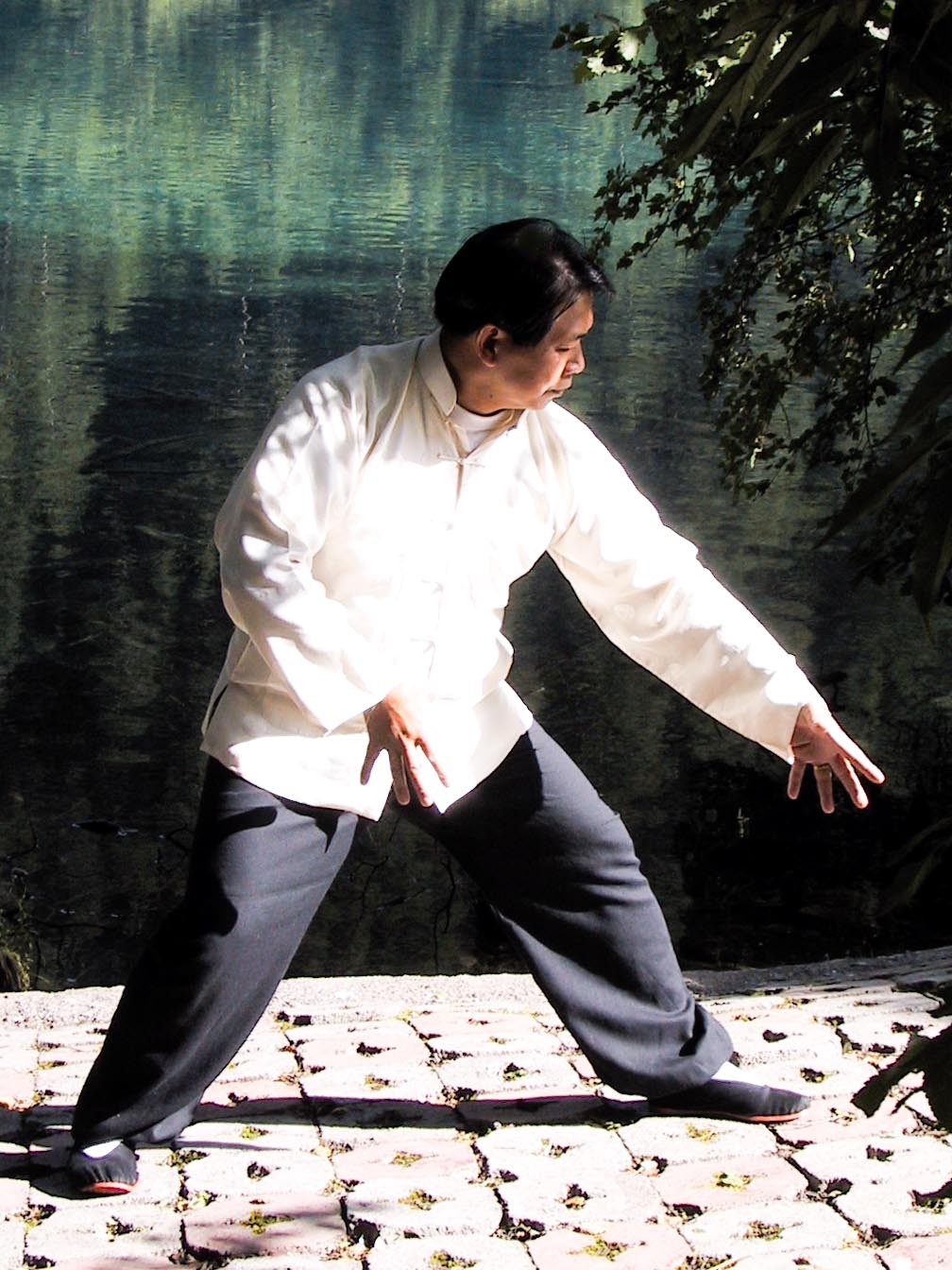
At its core, Qi Gong functions by guiding the practitioner's attention and intention to cultivate and direct the body's vital energy, qi. This is achieved through a synergistic combination of three primary elements: posture, breath, and mind. Postures can range from static stances to slow, flowing movements, designed to open energy pathways (meridians) and promote circulation. Breathing techniques, often deep and diaphragmatic, are synchronized with movement to enhance oxygenation and calm the nervous system. The meditative aspect involves focused awareness, visualization, and cultivating a state of relaxed alertness, which is crucial for directing qi. Different styles emphasize different aspects; for instance, Medical Qi Gong focuses on healing and balancing the body's systems, while Martial Arts Qi Gong aims to build internal power and resilience for combat. The practice is believed to stimulate the autonomic nervous system, reduce stress hormones like cortisol, and improve cardiovascular health through gentle physical exertion and mindful regulation.
📊 Key Facts & Numbers
Qi Gong is practiced by an estimated 100 million people worldwide, with a significant concentration in China. In the United States alone, it is estimated that over 2.5 million people regularly practice Qi Gong. Studies have indicated that regular Qi Gong practice can lead to a 15-20% reduction in reported stress levels among participants. Research published in the Journal of Alternative and Complementary Medicine has shown that Qi Gong can improve balance in older adults by up to 30% within six months. The global market for mind-body exercise, which includes Qi Gong, was valued at approximately $10 billion in 2023 and is projected to grow by 8% annually. Approximately 70% of practitioners report experiencing improved sleep quality, with an average reduction of 25 minutes in time taken to fall asleep. The number of Qi Gong instructors certified by major organizations like the National Qigong Association has seen a steady increase of 5-10% per year since 2010.
👥 Key People & Organizations
While Qi Gong is a broad practice with many lineages, certain individuals and organizations have been pivotal in its dissemination and study. Li Zi-chen (1900-1990) was a prominent martial artist and Qi Gong master who developed the Li Zi-chen Qigong system, emphasizing health and longevity. Wei Ling Yi (1917-2003) founded the Universal Qi Gong Association, promoting a style focused on cosmic energy. In the West, figures like Ken Cohen have been instrumental in introducing and teaching Qi Gong since the 1970s, authoring influential books such as 'The Way of Qigong'. Organizations like the National Qigong Association in the US provide certification and resources for practitioners and instructors. Academic institutions, including Stanford University and UCLA, have also conducted research into its physiological and psychological effects, often collaborating with researchers from institutions like Beijing University of Chinese Medicine.
🌍 Cultural Impact & Influence
Qi Gong's cultural footprint extends far beyond its Chinese origins, influencing global wellness trends and alternative health movements. Its emphasis on self-cultivation and holistic health resonates with a growing international interest in mind-body practices, alongside Yoga and Tai Chi. The visual aesthetic of Qi Gong movements has inspired choreography in contemporary dance and performance art. In film and literature, Qi Gong often appears as a mystical power or a path to enlightenment, shaping popular perceptions of Chinese culture. Its integration into hospital wellness programs and corporate employee assistance programs in countries like the United States and Germany highlights its growing acceptance as a legitimate health modality. The global spread of Qi Gong has also led to cross-cultural adaptations, blending its principles with local traditions and philosophies, demonstrating its adaptability and enduring appeal.
⚡ Current State & Latest Developments
The current landscape of Qi Gong is characterized by both traditional practice and modern scientific inquiry. In 2024, there's a notable surge in online Qi Gong classes and virtual workshops, a trend accelerated by the COVID-19 pandemic, making the practice more accessible globally. Research continues to explore its efficacy for specific conditions, with recent studies in 2023-2024 focusing on its potential benefits for chronic pain management, anxiety, and PTSD. The World Health Organization has acknowledged the role of traditional medicine, including practices like Qi Gong, in global health strategies. Simultaneously, there's an ongoing effort to standardize instructor training and practice guidelines to ensure quality and safety, particularly as Qi Gong gains traction in mainstream healthcare settings. The development of wearable technology is also beginning to be explored for monitoring physiological responses during Qi Gong practice.
🤔 Controversies & Debates
Qi Gong is not without its controversies and debates, primarily revolving around its scientific validation and the claims made by some practitioners. Skeptics often question the concept of 'qi' itself, arguing it lacks empirical evidence and falls into the realm of pseudoscience. Critics point to instances of unqualified instructors making unsubstantiated health claims, leading to potential harm or financial exploitation. The historical development of Qi Gong has also seen periods of political manipulation, particularly during the Cultural Revolution in China, where practices were sometimes suppressed or altered for ideological reasons. Debates also arise regarding the standardization of styles; with thousands of variations, establishing a universal benchmark for effectiveness and safety remains a challenge. Furthermore, the distinction between Qi Gong as a health practice and its potential for spiritual or even cult-like indoctrination by unscrupulous individuals is a persistent concern for many.
🔮 Future Outlook & Predictions
The future of Qi Gong appears poised for continued growth, driven by an increasing global demand for holistic health solutions and a deeper scientific understanding of mind-body practices. As research into Qi Gong's physiological and psychological benefits expands, it is likely to see greater integration into conventional healthcare systems, potentially being prescribed as a complementary therapy for a wider range of conditions. The development of more sophisticated biofeedback devices could offer objective measures of qi cultivation, bridging the gap between traditional understanding and modern science. Furthermore, the ongoing digitalization of wellness will likely lead to more innovative online platforms and immersive virtual reality experiences for Qi Gong training. There is also potential for Qi Gong principles to be integrated into new forms of mindfulness and stress-reduction programs, reaching demographics previously unfamiliar with traditional Chinese practices. The challenge will be to maintain the integrity and depth of the practice while adapting to contemporary needs and scientific scrutiny.
💡 Practical Applications
Qi Gong's practical applications are diverse, spanning health, wellness, and personal development. It is widely used as a form of gentle exercise for geriatric care, improving mobility and balance in seniors, and is often incorporated into rehabilitation programs for stroke patients and individuals recovering from musculoskeletal injuries. Many individuals practice it for stress management, using its meditative and breathing techniques to alleviate symptoms of anxiety and depression. In martial arts training, specific Qi Gong forms are employed to build internal strength, resilience, and power, as seen in styles like Wing Chun and Baguazhang. It is also utilized in preventive medicine settings, with practitioners aiming to bolster their immune systems and maintain overall vitality. Some practitioners also explore Qi Gong for spiritual growth and self-awareness, seeking a deeper connection with themselves and the universe.
Key Facts
- Year
- Ancient origins, term popularized mid-20th century
- Origin
- China
- Category
- culture
- Type
- concept
Frequently Asked Questions
What is Qi Gong and how is it different from Tai Chi?
Qi Gong is an ancient Chinese practice involving mindful movement, deep breathing, and meditation to cultivate vital energy (qi). Tai Chi is often considered a more complex form of moving meditation that evolved from Qi Gong, typically involving more intricate, flowing sequences of movements designed for both health and martial applications. While both aim to harmonize the body and mind, Qi Gong encompasses a broader range of practices, including static postures and simpler movements, whereas Tai Chi is primarily known for its distinct, choreographed forms.
What are the main health benefits of practicing Qi Gong?
Practitioners report a wide array of health benefits from Qi Gong, including reduced stress and anxiety, improved sleep quality, enhanced balance and coordination, increased flexibility, and better cardiovascular health. It is also used to manage chronic pain and support recovery from illness or injury. The practice is believed to work by calming the nervous system, improving circulation of qi and blood, and promoting overall homeostasis within the body's systems, as supported by various studies on its physiological effects.
Is Qi Gong a religion or a spiritual practice?
Qi Gong is not inherently a religion, though it is deeply influenced by Taoism and Buddhism and can be a spiritual practice for many. Its primary focus is on cultivating health and vitality through mind-body techniques. While some forms may incorporate philosophical or spiritual elements, the practice itself can be approached purely from a health and wellness perspective without religious affiliation. Many practitioners engage with Qi Gong for its physical and mental benefits, while others find it a pathway to deeper self-awareness and spiritual connection.
How does one start practicing Qi Gong?
To begin practicing Qi Gong, it's recommended to find a qualified instructor or a reputable class, either in-person or online. Many community centers, yoga studios, and martial arts schools offer Qi Gong classes. Alternatively, numerous books and videos are available that demonstrate basic forms and techniques. Start with simple, foundational exercises and focus on consistent, gentle practice, paying attention to your body's sensations and coordinating your breath with movement. Consistency, even for 10-15 minutes daily, is more beneficial than infrequent long sessions.
What is 'qi' and how does Qi Gong cultivate it?
'Qi' (pronounced 'chee') is a fundamental concept in Chinese culture, often translated as vital energy, life force, or breath. It is believed to flow through channels in the body called meridians, and its smooth, unimpeded flow is essential for health. Qi Gong cultivates qi through a combination of specific postures, slow and deliberate movements, deep rhythmic breathing, and focused intention or meditation. These practices are designed to open up the body's energy pathways, clear blockages, and harmonize the flow of qi, thereby promoting physical vitality, mental clarity, and emotional balance.
Are there different styles of Qi Gong, and which one is best?
Yes, there are thousands of styles of Qi Gong, developed over centuries by different masters and lineages. They can be broadly categorized into medical Qi Gong (focused on healing), martial arts Qi Gong (focused on building internal power), and spiritual Qi Gong (focused on self-cultivation and enlightenment). There isn't one 'best' style; the most suitable style depends on an individual's goals, physical condition, and preferences. Some popular styles include Ba Duan Jin (Eight Brocades), Yi Jin Jing (Muscle/Tendon Change Classic), and Wu Qin Xi (Five Animals Frolic). Exploring different styles and finding a qualified instructor is key to discovering what resonates most with you.
What does scientific research say about Qi Gong's effectiveness?
Scientific research on Qi Gong has shown promising results, particularly in areas of stress reduction, anxiety management, and improved balance in older adults. Studies published in journals like the 'Journal of Alternative and Complementary Medicine' and 'Evidence-Based Complementary and Alternative Medicine' have indicated positive effects on cardiovascular health, immune function, and pain management. While the concept of 'qi' itself remains difficult to measure objectively, research often focuses on the physiological outcomes of the practice, such as changes in heart rate variability, cortisol levels, and inflammatory markers. More rigorous, large-scale studies are ongoing to further validate its therapeutic potential.