
Contents
Overview
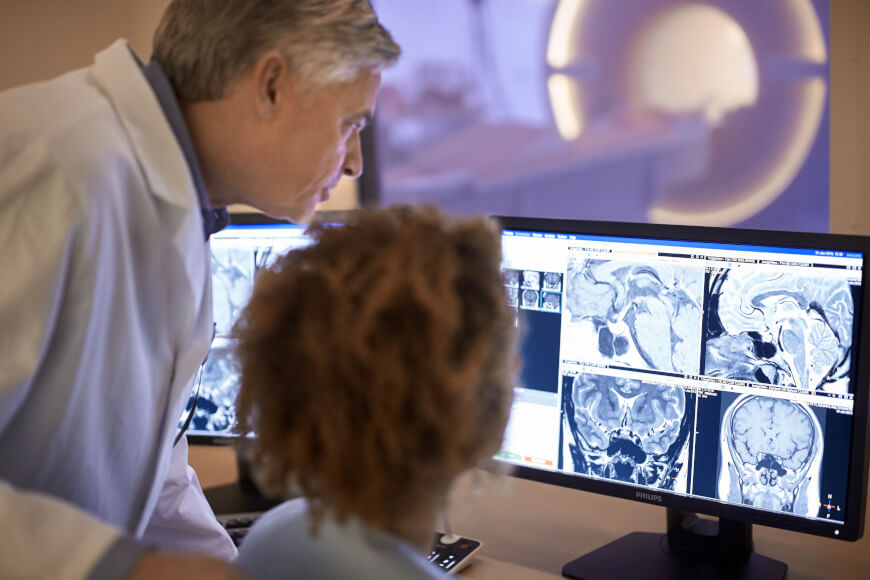
Radiology departments are the crucial hubs within healthcare institutions responsible for acquiring and interpreting medical images to diagnose diseases and guide treatments. Originating with radiography in the late 19th century, these departments have evolved dramatically to encompass a vast array of imaging modalities, including CT, MRI, ultrasonography, and nuclear medicine. These departments are staffed by highly specialized professionals, primarily radiologists—physicians trained to interpret these complex images—and radiologic technologists who operate the sophisticated equipment. The global medical imaging market, a key indicator of radiology's scale, was valued at approximately $39.1 billion in 2022 and is projected to grow significantly, underscoring the immense economic and clinical importance of these departments. They are indispensable for everything from detecting early-stage cancers to guiding minimally invasive surgical procedures, making them a cornerstone of contemporary medicine.
🎵 Origins & History
Wilhelm Röntgen discovered X-rays in his laboratory at the University of Würzburg in Bavaria. This groundbreaking discovery, initially termed 'X-strahlen,' allowed physicians for the first time to visualize the internal skeletal structure of a living person without invasive surgery. Early adopters quickly recognized the diagnostic potential, leading to the establishment of dedicated X-ray rooms, the precursors to modern radiology departments, within hospitals by the early 20th century. The field rapidly expanded with the development of contrast agents and more sophisticated equipment, laying the foundation for specialized medical imaging centers that would become integral to healthcare systems worldwide.
⚙️ How It Works
A radiology department functions as a complex ecosystem of technology and expertise. It begins with a physician referral, prompting a radiologic technologist to perform a specific imaging study using modalities like CT scanners, MRI machines, or ultrasound devices. These machines generate vast amounts of digital data, which are then processed and stored, often on a PACS. The images are subsequently interpreted by a radiologist, a physician with specialized training in image analysis, who dictates a detailed report. This report is then transmitted back to the referring physician, providing critical diagnostic information that informs patient care decisions. Interventional radiology, a subspecialty, also utilizes imaging guidance for minimally invasive procedures like angioplasty or biopsies.
📊 Key Facts & Numbers
The scale of radiology departments globally is staggering. Hospitals typically dedicate significant physical space and capital investment to their radiology departments, with advanced MRI scanners costing upwards of $1 million and CT scanners often exceeding $500,000. The average hospital radiology department may employ dozens of technologists and several radiologists, reflecting the high patient volume and complexity of services offered.
👥 Key People & Organizations
Key figures in the development of radiology departments include Wilhelm Conrad Röntgen, whose discovery of X-rays in 1895 was the foundational event. Early pioneers like Charles Lester Leonard and Francis H. Williams were instrumental in establishing early X-ray services in hospitals. Today, professional organizations such as the Radiological Society of North America (RSNA) and the American College of Radiology (ACR) play pivotal roles in setting standards, advocating for the profession, and providing continuing education. Major equipment manufacturers like Siemens Healthineers, GE Healthcare, and Philips Healthcare are critical partners, developing and supplying the advanced imaging technologies that define modern radiology departments.
🌍 Cultural Impact & Influence
Radiology departments have profoundly shaped public perception of medicine, often becoming synonymous with advanced diagnostic capabilities. The image of a doctor peering at X-ray films, once a rare sight, is now a common trope in media, symbolizing medical expertise and the ability to see the unseen. This visibility has contributed to a high Vibe score for the field, blending scientific rigor with a touch of futuristic mystique. The widespread adoption of imaging technologies has also democratized access to diagnostic information, empowering patients and physicians alike. Furthermore, the development of PACS and RIS has revolutionized workflow, moving departments from analog film to digital environments, a transition that has influenced IT infrastructure across the entire healthcare sector.
⚡ Current State & Latest Developments
The current landscape of radiology departments is characterized by rapid technological advancement and evolving clinical integration. AI is increasingly being used in radiology, with algorithms assisting in tasks like nodule detection on CT scans and fracture identification on X-rays. Radiomics is gaining traction for its potential in personalized medicine and treatment response prediction. Furthermore, there's a growing emphasis on interventional radiology as a minimally invasive treatment modality, shifting some procedures from traditional operating rooms to the radiology suite. The integration of radiology into broader clinical workflows, facilitated by advanced PACS and EHR systems, is also a key development in 2024.
🤔 Controversies & Debates
One persistent controversy surrounding radiology departments revolves around radiation exposure. While modern equipment is designed to minimize doses, the cumulative effect of multiple imaging studies, particularly CT scans, remains a concern, leading to debates about appropriate utilization and the development of ultra-low-dose techniques. Another area of contention is the increasing role of AI in image interpretation. While proponents highlight its potential for efficiency and accuracy, critics voice concerns about algorithmic bias, the 'black box' nature of some AI models, and the potential displacement of human radiologists. The economic pressures on healthcare systems also lead to debates about staffing levels, reimbursement rates for imaging services, and the balance between private practice and hospital-based radiology groups.
🔮 Future Outlook & Predictions
The future of radiology departments is poised for significant transformation, driven by continued advancements in AI, molecular imaging, and personalized medicine. We can anticipate AI becoming an indispensable partner for radiologists, handling routine tasks and flagging subtle abnormalities, thereby freeing up human experts for complex cases and interventional procedures. The integration of radiomics and other quantitative imaging techniques will enable more precise diagnoses and tailored treatment plans. Furthermore, the development of novel imaging agents and techniques, such as PET tracers for specific biomarkers, will allow for earlier and more accurate detection of diseases like Alzheimer's disease and various cancers. The physical layout and workflow of radiology departments may also evolve, with greater emphasis on outpatient imaging centers and remote reading capabilities.
💡 Practical Applications
Radiology departments are central to a vast array of practical applications across medicine. They are indispensable for diagnosing fractures and dislocations in orthopedics, detecting tumors and staging cancers in oncology, and evaluating organ function in nephrology and cardiology. Interventional radiology procedures, performed within these departments, are used to treat conditions like deep vein thrombosis, peripheral artery disease, and certa
Key Facts
- Category
- science
- Type
- topic