
Contents
Overview
The concept of the riparian zone, though perhaps not always explicitly named, has been understood by human societies for millennia, particularly by those living in close proximity to rivers and streams. Ancient civilizations recognized the fertility and unique ecological characteristics of these riverbank environments, often basing settlements and agriculture around them. Early scientific observations began to formally describe the distinct vegetation and ecological functions of these areas. The term 'riparian' itself, derived from the Latin 'ripa' (river bank), gained traction in scientific literature as ecological studies became more formalized. Henry David Thoreau, in his writings on Walden Pond, captured the essence of the interconnectedness between water bodies and their surrounding landscapes. The formalization of riparian science accelerated with increased awareness of watershed management and the ecological impacts of human development, leading to the establishment of specific research fields and conservation efforts by organizations like the EPA.
⚙️ How It Works
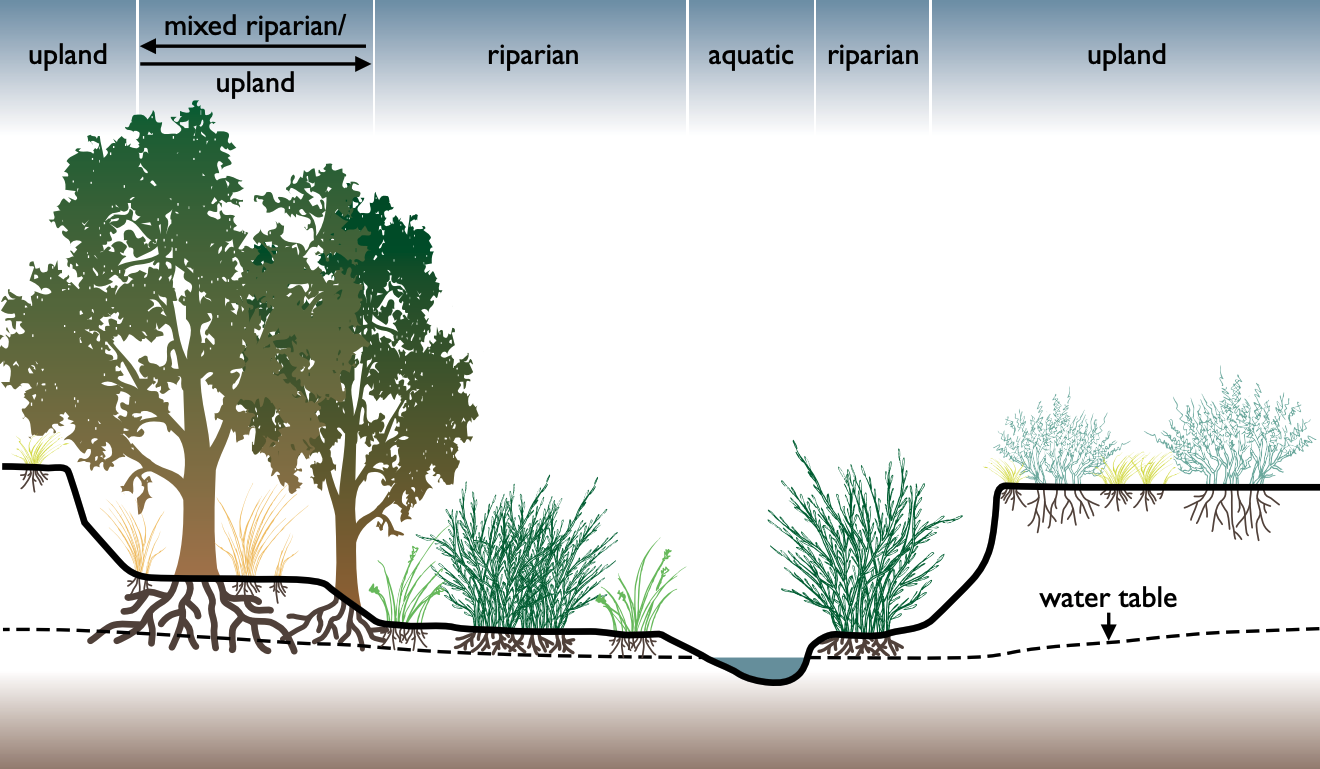
Riparian zones function as dynamic ecological engines through a complex interplay of hydrological, geomorphological, and biological processes. Hydrologically, they mediate the flow of water between surface and groundwater systems, thereby influencing streamflow regulation and aquifer recharge. Geomorphologically, the vegetation anchors soil, stabilizing stream banks and reducing erosion, while the fluctuating water levels shape the physical structure of the zone, creating diverse microhabitats. Biologically, these zones support a disproportionately high biodiversity due to the availability of water, nutrients, and varied habitats. The root systems of riparian plants enhance soil stability and water infiltration, while their canopy cover moderates water temperature and provides shade. Furthermore, the decomposition of organic matter from riparian vegetation fuels aquatic food webs, and the physical structure offers crucial habitats for insects, amphibians, birds, and mammals, creating a rich ecological mosaic.
📊 Key Facts & Numbers
Globally, riparian zones represent a significant ecological asset, though precise acreage is difficult to quantify due to varying definitions and scales. Studies have shown that riparian buffers can reduce sediment and nutrient loads in rivers by as much as 70-90% under optimal conditions. For instance, a well-established riparian buffer of 30 meters (about 100 feet) can effectively filter agricultural runoff. The economic value of riparian ecosystem services, including water purification and flood control, is estimated to be in the billions of dollars annually worldwide. For example, the mississippi-river-basin's riparian corridors play a critical role in mitigating flood damage, saving billions in potential losses during major flood events. The biodiversity found in these zones often exceeds that of adjacent uplands by a factor of 2 to 3.
👥 Key People & Organizations
Numerous individuals and organizations have been instrumental in advancing the understanding and conservation of riparian zones. Ecologists like robert-howard-naiman have made seminal contributions to the study of riparian ecosystem processes and functions, particularly in temperate forest systems. Organizations such as the The Nature Conservancy and the WWF have spearheaded numerous riparian restoration projects across the globe, from the amazon-rainforest to the missouri-river. Government agencies like the BLM and the US Forest Service in the United States, along with their counterparts in countries like Canada and Australia, manage vast tracts of riparian lands, implementing policies for their protection and restoration. Research institutions, including stanford-university and the university-of-wisconsin-madison, host dedicated centers for riparian research, fostering interdisciplinary collaboration and training future generations of scientists.
🌍 Cultural Impact & Influence
The cultural resonance of riparian zones is profound, deeply embedded in human history, art, and literature. Rivers and their banks have been cradles of civilization, sites of spiritual significance, and sources of inspiration for countless artists and writers. From the ancient Egyptian reverence for the nile-river to the romantic landscapes depicted by painters like j-m-w-turner, the aesthetic and symbolic power of riverine environments is undeniable. In literature, authors like mark-twain in 'Adventures of Huckleberry Finn' captured the spirit of life along the mississippi-river, highlighting its role as a pathway and a character in itself. Indigenous cultures worldwide often hold deep spiritual connections to riparian areas, viewing them as sacred spaces and vital sources of life. Modern environmental movements frequently use the health of riparian zones as a barometer for overall watershed health, influencing public perception and policy debates around water quality and conservation.
⚡ Current State & Latest Developments
In 2024, riparian zones are at a critical juncture, facing escalating threats from climate change, agricultural expansion, and urbanization. Global efforts are increasingly focused on large-scale riparian restoration initiatives, such as the Great Green Wall in Africa, which includes significant riparian components along river systems. Advances in remote sensing and GIS technology, pioneered by companies like esri, are providing unprecedented capabilities for monitoring riparian health and identifying areas in need of intervention. The development of innovative bioengineering techniques for bank stabilization and the use of native plant species in restoration projects are gaining traction. Furthermore, policy shifts in many regions are emphasizing the integration of riparian zone protection into broader land-use planning and water resource management frameworks, recognizing their essential role in climate resilience and sustainable development.
🤔 Controversies & Debates
The management and conservation of riparian zones are subjects of considerable debate, particularly concerning land use and water rights. A central controversy revolves around the extent to which riparian vegetation should be preserved versus cleared for agricultural or development purposes. Farmers often argue for access to riverbanks for irrigation and livestock watering, while conservationists advocate for wider buffer zones to maximize ecological benefits. Another contentious issue is the definition and legal protection of riparian rights, which vary significantly by jurisdiction. In some Western U.S. states, for example, water rights are tied to land ownership adjacent to water bodies, leading to complex legal battles over water allocation and riparian zone management. The effectiveness and cost-benefit analysis of different restoration techniques also spark debate among scientists and practitioners, with ongoing discussions about the most sustainable and ecologically sound approaches.
🔮 Future Outlook & Predictions
The future of riparian zones hinges on our ability to adapt to a changing climate and implement effective, integrated management strategies. Projections suggest that altered precipitation patterns and increased frequency of extreme weather events, such as floods and droughts, will place further stress on these ecosystems. This necessitates a shift towards more resilient restoration designs and adaptive management approaches. The role of riparian zones in carbon sequestration is also gaining attention, with research exploring their potential as significant carbon sinks, which could drive new conservation incentives. Furthermore, the integration of 'nature-based solutions' in urban planning, utilizing riparian corridors for stormwater management and urban cooling, is expected to expand significantly. The success of these future endeavors will depend on continued scientific research, robust policy frameworks, and sustained pub
Key Facts
- Category
- nature
- Type
- topic