
Contents
Overview
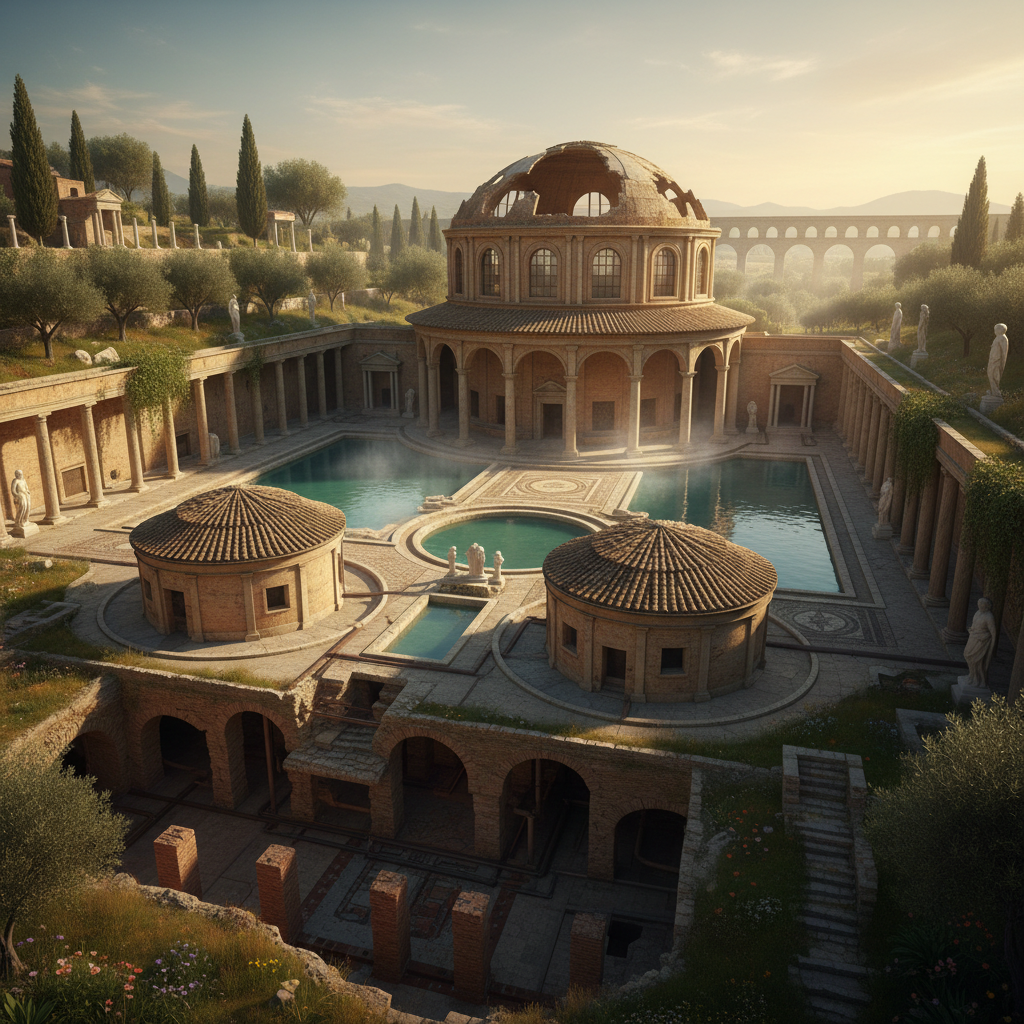
Roman Baths originated in the 1st century BCE, blending practicality with luxury. Emperor Hadrian's Baths in Rome (120 CE) and the Baths of Caracalla (216 CE) exemplified their grandeur, featuring hypocaust heating systems and mosaic floors. These baths were not just for hygiene but also served as social hubs where citizens from all classes gathered, reflecting the Roman emphasis on public welfare. The design incorporated aqueducts like the Aqua Appia, showcasing the empire's mastery of water distribution.
⚙️ How It Works
The engineering behind Roman Baths was revolutionary. The hypocaust system, which used underfloor heating, was powered by wood or charcoal, while travertine stone ensured durability. Water was sourced from public fountains like the Fontes Agrippae and distributed via lead pipes, a technique later adopted by the British in Bath, England. The baths featured multiple rooms, including frigidaria (cold pools), tepidaria (warm rooms), and caldaria (hot baths), with some complexes like the Baths of Diocletian in Rome accommodating thousands of visitors daily.
🌍 Cultural Impact
Culturally, Roman Baths were central to daily life, fostering community and leisure. They were frequented by philosophers like Seneca and politicians, while the Baths of Caracalla included libraries and gardens. The baths also influenced later European architecture, with the Renaissance revival of Roman engineering seen in structures like the Pantheon. However, their decline began with the fall of the Western Roman Empire in 476 CE, as maintenance faltered and public health practices regressed.
🔮 Legacy & Future
Today, Roman Baths are preserved as UNESCO sites, with the Baths of Diocletian in Rome and the Roman Baths in Bath, England attracting millions. Modern sanitation systems owe much to Roman innovations, from aqueducts to public hygiene norms. Archaeological discoveries, like the 2016 excavation of the Baths of Caracalla, continue to reveal their sophistication. Future preservation efforts aim to balance tourism with conservation, ensuring these ancient marvels remain a testament to Roman ingenuity.
Key Facts
- Year
- 1st century BCE–5th century CE
- Origin
- Ancient Rome, with influences spreading across the Roman Empire
- Category
- history
- Type
- place
Frequently Asked Questions
What were Roman Baths used for?
Roman Baths served as public spaces for hygiene, socializing, and leisure. They featured hot, warm, and cold pools, as well as libraries, gardens, and exercise areas, catering to all social classes.
How did the Romans heat their baths?
The hypocaust system used underfloor heating, with hot air circulated through channels beneath the floors. This innovation, combined with aqueducts like the Aqua Appia, allowed for efficient water and heat distribution.
Where can I see Roman Baths today?
The Baths of Diocletian in Rome and the Roman Baths in Bath, England are preserved sites. Archaeological sites like the Baths of Caracalla in Rome are also open for exploration.
Did Roman Baths influence modern sanitation?
Yes! Roman aqueducts, lead pipes, and public hygiene norms laid the groundwork for modern sanitation systems. The concept of communal bathing persists in modern wellness culture.
Why did Roman Baths decline?
The fall of the Western Roman Empire in 476 CE led to the abandonment of many baths. Maintenance costs, political instability, and shifts in societal priorities contributed to their decline.