Contents
Overview
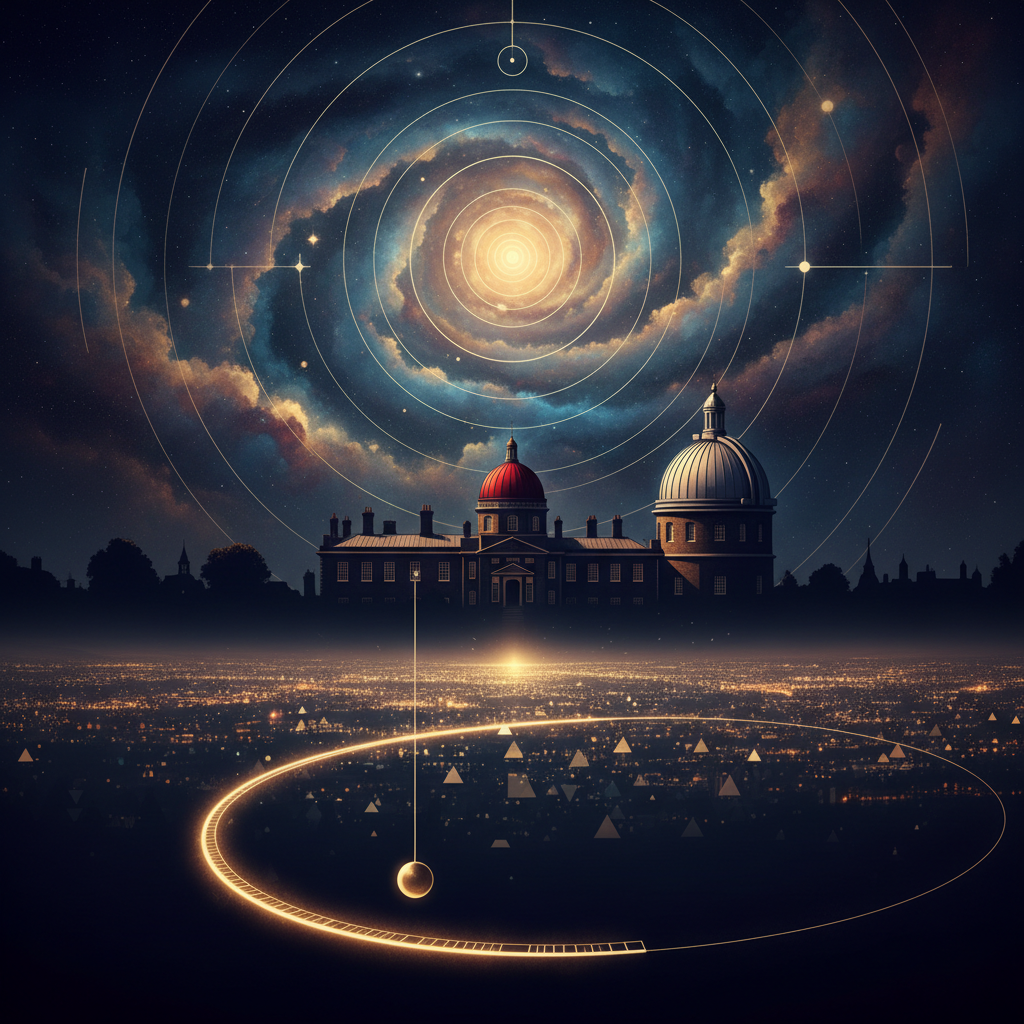
The Royal Observatory Greenwich was founded in 1675 by King Charles II, with the primary goal of improving navigation and cartography by determining the longitude of ships at sea. The observatory's first astronomer royal, John Flamsteed, was tasked with creating a comprehensive catalog of celestial bodies, which would later become the basis for modern astronomy. Over the years, the observatory has been the site of numerous groundbreaking discoveries, including the determination of the longitude problem by John Harrison, who developed the first accurate marine chronometer, and the discovery of the planet Uranus by William Herschel, a British astronomer who was a fellow of the Royal Society and a friend of Joseph Banks, the president of the Royal Society.
🔭 Astronomical Discoveries and Innovations
The Royal Observatory Greenwich has also been at the forefront of astronomical innovation, with the development of new telescopes and observational techniques. In the 19th century, the observatory became a leading center for astrophysics, with the work of astronomers like William Huggins, who discovered the composition of the sun and the stars, and George Airy, who developed the concept of the 'Airy disk', a fundamental principle in optics. Today, the observatory continues to be a hub for astronomical research, with collaborations with institutions like the University of Oxford, the University of California, Berkeley, and the Max Planck Institute for Astronomy.
🕰️ Timekeeping and the Prime Meridian
The Royal Observatory Greenwich is also home to the Prime Meridian, which was established in 1884 as the universal reference point for longitude. The Prime Meridian is marked by a line on the ground, and visitors can stand with one foot in the eastern hemisphere and one foot in the western hemisphere, a popular tourist attraction that has been visited by millions of people, including celebrities like Stephen Hawking, Neil deGrasse Tyson, and Brian Cox. The observatory's timekeeping functions are still maintained today, with the Royal Observatory Greenwich serving as the official timekeeper for the UK, using atomic clocks developed by physicists like Isambard Kingdom Brunel and Charles Babbage.
🌐 Modern Research and Education
In recent years, the Royal Observatory Greenwich has expanded its focus to include modern research and education, with a range of programs and activities for students, teachers, and the general public. The observatory offers degree programs in astronomy and astrophysics, in partnership with universities like the University of London and the University of Manchester, and provides training and resources for teachers, using educational resources developed by organizations like the European Space Agency and the NASA Jet Propulsion Laboratory. The observatory also hosts a range of public events and exhibitions, including stargazing nights, planetarium shows, and interactive displays, using technology developed by companies like Google, Microsoft, and IBM.
Key Facts
- Year
- 1675
- Origin
- Greenwich, London, UK
- Category
- history
- Type
- place
Frequently Asked Questions
What is the Royal Observatory Greenwich?
The Royal Observatory Greenwich is a historic observatory located in Greenwich, London, that has played a significant role in the development of modern astronomy and timekeeping.
Who was the first astronomer royal?
The first astronomer royal was John Flamsteed, who was appointed by King Charles II in 1675.
What is the Prime Meridian?
The Prime Meridian is the universal reference point for longitude, established in 1884 at the Royal Observatory Greenwich.
What is the role of the Royal Observatory Greenwich today?
The Royal Observatory Greenwich is a leading center for astronomical research and education, with a range of programs and activities for students, teachers, and the general public.
Who are some notable people associated with the Royal Observatory Greenwich?
Notable people associated with the Royal Observatory Greenwich include John Flamsteed, John Harrison, William Herschel, Isambard Kingdom Brunel, and Stephen Hawking.