
Contents
Overview
Semi-modular synthesizers represent a fascinating middle ground in the world of electronic music synthesis, offering a fixed architecture that's immediately playable, yet retaining the flexibility of patchable connections. Unlike fully modular systems where every function is a separate module requiring external cabling for basic operation, semi-modulars come with pre-wired internal connections. These internal 'normalled' paths allow semi-modulars to function as standalone instruments, producing sound right out of the box. However, they also feature a patch bay, typically using 3.5mm TS cables, that allows users to break these internal connections and reroute signals. This enables deep customization, experimentation, and the creation of unique sonic palettes that go far beyond the instrument's default configuration. They are prized for their tactile control, immediate sonic gratification, and their ability to serve as both a gateway into modular synthesis and a powerful, distinct instrument in their own right. The market for semi-modulars has seen significant growth since the early 2010s, with manufacturers like Moog Music, Behringer, Arturia, and Korg releasing popular models that cater to a wide range of budgets and sonic ambitions.
🎵 Origins & History
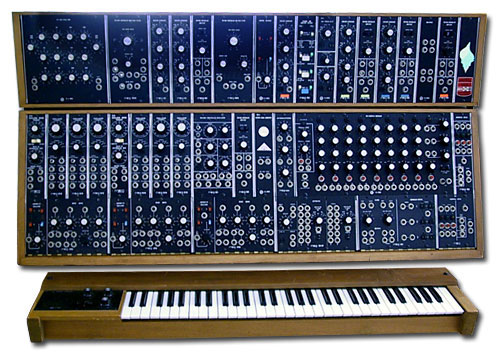
The concept of a semi-modular synthesizer didn't emerge in a vacuum; it evolved from the pioneering work in modular synthesis pioneered by Robert Moog and Don Buchla in the 1960s. Early modular systems, like the Moog Modular (first released in 1964), were groundbreaking but complex and expensive, often requiring dedicated studio space. The desire for more accessible and integrated synthesizers led to the development of instruments that retained some modularity while offering a more streamlined user experience. The Minimoog Model D, released in 1970, is a prime example of an early, highly influential semi-modular design. While not fully patchable in the way its modular predecessors were, it featured a fixed signal path with accessible controls for each stage, and later iterations and similar instruments from companies like ARP Instruments began to incorporate limited patch points. This foundational period established the core idea: a playable instrument with the potential for deep sonic manipulation through accessible patching.
⚙️ How It Works
At its heart, a semi-modular synthesizer combines a fixed signal path with a patch bay. The fixed path, often referred to as 'normalled' connections, means that audio and control voltage signals flow between modules (like oscillators, filters, and amplifiers) in a predetermined order, allowing the instrument to produce sound immediately upon power-up. The patch bay, typically populated with 3.5mm or 1/4" jacks, allows users to override these internal connections. For instance, you can reroute the output of an oscillator to a different filter, send an LFO to control the pitch of another oscillator, or use an envelope generator to modulate the filter cutoff, all by plugging cables between the jacks. This ability to break and reconfigure the internal signal flow is what distinguishes semi-modulars from standard fixed-architecture synthesizers and provides a vast playground for sound design, bridging the gap between traditional synths and fully modular systems like Eurorack.
📊 Key Facts & Numbers
The semi-modular market has exploded in recent years, with hundreds of thousands of units sold annually. As of 2024, there are over 150 distinct semi-modular synthesizer models available from more than 50 manufacturers worldwide. The price range for these instruments can vary dramatically, from under $200 for compact desktop units like the Behringer Model D to over $4,000 for high-end, complex systems like the Moog Matriarch. The average street price for a popular mid-range semi-modular synth hovers around $600. Over 70% of semi-modular sales in 2023 were for desktop or keyboard-based units, indicating a strong preference for integrated solutions over standalone modules. Approximately 85% of these instruments utilize analog signal paths, though digital and hybrid designs are gaining traction.
👥 Key People & Organizations
Key figures in the development and popularization of semi-modular synthesizers include Robert Moog, whose early modular systems laid the groundwork and whose later designs like the Minimoog Model D became iconic semi-modulars. Don Buchla, another pioneer of modular synthesis, also explored integrated designs. In the modern era, companies like Moog Music continue to be a benchmark with instruments like the Mother-32 and DFAM. Behringer has achieved massive market penetration with its affordable clones and original designs. Arturia has found success with its KeyStep Pro controller, which integrates well with semi-modulars, and its own semi-modular offerings like the Minibrute 2. Korg's Volca series, particularly the Volca Modular, has introduced many to the concept at an entry-level price point. Erica Synths is also a significant player with its range of innovative semi-modular instruments.
🌍 Cultural Impact & Influence
Semi-modular synthesizers have profoundly influenced electronic music production and performance. They offer a tactile and immediate way to explore complex synthesis techniques, making them popular among artists seeking unique sound design capabilities without the steep learning curve of fully modular systems. Genres like ambient, techno, experimental electronic, and film scoring have benefited from the distinctive textures and evolving soundscapes that semi-modulars can produce. Their visual appeal, with rows of jacks and knobs, also contributes to their presence in live performance setups, often becoming a focal point. Artists such as Aphex Twin (Richard D. James) and Trent Reznor have famously incorporated modular and semi-modular synths into their creative processes, showcasing their sonic versatility and inspiring legions of producers.
⚡ Current State & Latest Developments
The current landscape of semi-modular synthesizers is characterized by an unprecedented diversity of options. Manufacturers are pushing boundaries with hybrid analog-digital designs, increased polyphony in semi-modular formats, and more sophisticated integration with digital workflows via MIDI and USB. The rise of desktop modules and compact, affordable units like those from Behringer and Korg has democratized access to these instruments. Furthermore, there's a growing trend towards semi-modular systems that are designed to integrate seamlessly into Eurorack systems, offering a bridge between standalone instruments and larger modular setups. Companies are also focusing on user experience, with intuitive layouts and comprehensive manuals becoming standard. The market continues to grow, with new models and innovations appearing quarterly.
🤔 Controversies & Debates
One of the primary debates surrounding semi-modular synthesizers centers on their classification: are they 'real' modular synths, or just advanced fixed-architecture instruments? Skeptics argue that the pre-wired connections limit true modular freedom, while proponents emphasize that the ability to break and re-route signals offers a significant degree of modularity and creative potential. Another point of contention is the affordability of certain models; while some brands offer budget-friendly options, high-end semi-modulars can still represent a substantial investment, leading to discussions about accessibility and value. The debate also extends to the choice between analog and digital/hybrid semi-modulars, with purists often favoring analog warmth and character, while others champion the versatility and stability of digital implementations.
🔮 Future Outlook & Predictions
The future of semi-modular synthesizers appears robust and innovative. We can expect to see continued advancements in hybrid designs, blending the best of analog warmth with digital precision and programmability. Increased integration with DAW software, offering more seamless control and recall of patches, is also likely. Polyphonic semi-modulars, which have historically been rare and expensive, may become more common as technology allows for more complex voice architectures in a compact format. Furthermore, the trend towards user-friendly interfaces and educational tools will likely continue, making semi-modulars an even more accessible entry point for aspiring sound designers and musicians. The potential for AI-driven patch generation or intelligent assistance within semi-modular frameworks also presents an intriguing, albeit speculative, future direction.
💡 Practical Applications
Semi-modular synthesizers find practical application across a wide spectrum of musical and sound design contexts. They are invaluable tools for electronic music producers creating everything from ambient soundscapes to driving techno rhythms, offering hands-on control over sound sculpting. In live performance, their immediate playability and visual presence make them a compelling choice for artists who want to interact dynamically with their sound. Sound designers fo
Key Facts
- Category
- technology
- Type
- topic