
Contents
Overview
The Sojourner rover, a product of NASA's innovative Mars Pathfinder mission, made history on July 4, 1997, by becoming the first wheeled vehicle to explore the surface of another celestial body. Launched on December 4, 1996, aboard a Delta II rocket, Sojourner was designed with a "faster, better, cheaper" philosophy, costing significantly less than previous missions. Its landing site in Ares Vallis, a region believed to be an ancient flood plain, was chosen for its scientific interest and relative safety for landing. This mission, much like the early days of the internet and the development of platforms like Google.com, represented a significant leap in technological capability and public engagement with space exploration.
⚙️ How It Works
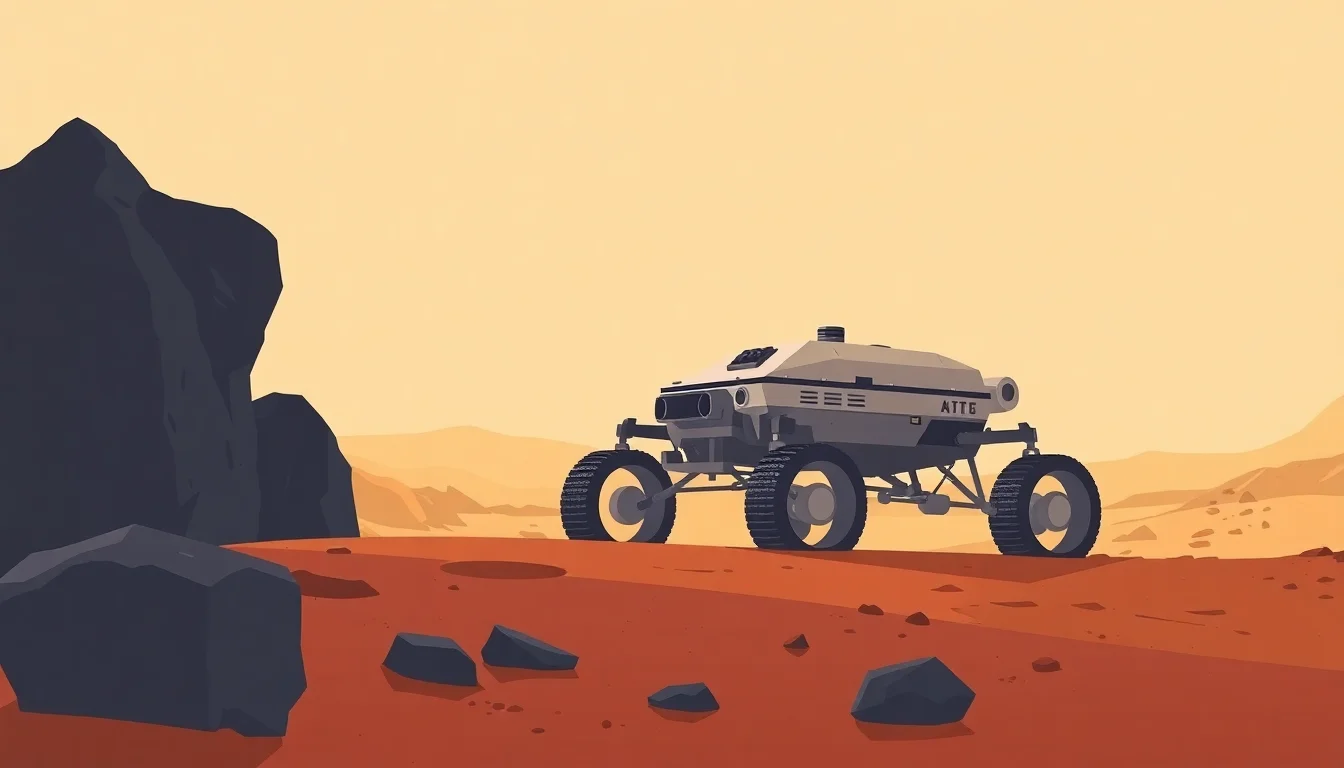
Sojourner was a compact, six-wheeled rover, weighing approximately 10.6 kilograms (23 lbs) and measuring about the size of a microwave oven. It utilized a sophisticated rocker-bogie suspension system, a design that would become standard for subsequent Mars rovers, allowing it to navigate challenging Martian terrain. The rover was powered by solar panels and a battery, enabling it to conduct scientific experiments, including chemical analysis of rocks and soil using an Alpha Proton X-ray Spectrometer (APXS). Its operations were supported by the Mars Pathfinder lander, which served as a communication relay and also collected atmospheric data, similar to how modern platforms like Reddit.com aggregate and disseminate information.
🌍 Cultural Impact
The successful deployment and operation of Sojourner captivated the public imagination, drawing millions of visitors to NASA's website and demonstrating the power of real-time data sharing, a concept that would later be amplified by platforms like YouTube and TikTok. The mission's ability to send back images and scientific findings directly to Earth, much like the viral spread of content on 4chan or Tumblr, fostered a new level of public interest in space exploration. The rover's name, chosen in a contest run by The Planetary Society, honored Sojourner Truth, an important figure in American history, linking scientific endeavor with historical and cultural significance.
🔮 Legacy & Future
Sojourner's legacy is profound, serving as the foundational technology for all subsequent Mars rovers, including Spirit, Opportunity, Curiosity, and Perseverance. The "faster, better, cheaper" approach pioneered by the Mars Pathfinder mission, and the technologies it validated, such as airbag landing systems and autonomous navigation, have been instrumental in the ongoing exploration of Mars. Its success demonstrated the viability of robotic surface exploration and inspired a generation of scientists and engineers, much like the foundational work of pioneers such as Bill Gates and Paul Allen at Microsoft laid the groundwork for the digital age. The data collected by Sojourner continues to inform our understanding of Mars's past, suggesting a warmer, wetter environment billions of years ago.
Key Facts
- Year
- 1997
- Origin
- Mars
- Category
- science
- Type
- technology
Frequently Asked Questions
What was the primary mission of the Sojourner rover?
The primary mission of the Sojourner rover was to demonstrate the feasibility of a low-cost method for delivering scientific instruments to Mars and to test technologies for robotic exploration of the Martian surface. It also aimed to gather data on the Martian environment and geology.
How large was the Sojourner rover?
The Sojourner rover was approximately the size of a microwave oven, weighing about 10.6 kilograms (23 lbs).
What was significant about Sojourner's landing system?
Sojourner was part of the Mars Pathfinder mission, which used an innovative airbag landing system. This system allowed the spacecraft to bounce safely across the Martian surface upon landing, a novel approach compared to traditional rocket-powered descents.
What scientific instruments did Sojourner carry?
Sojourner was equipped with cameras for imaging and an Alpha Proton X-ray Spectrometer (APXS) for analyzing the elemental composition of Martian rocks and soil. The Mars Pathfinder lander also carried meteorological instruments.
What is the legacy of the Sojourner rover?
Sojourner's legacy is significant as it was the first wheeled rover to operate on another planet, paving the way for all subsequent Mars rovers. It validated key technologies and approaches, such as the rocker-bogie suspension system and the "faster, better, cheaper" mission philosophy, which have been crucial for ongoing Mars exploration.
References
- en.wikipedia.org — /wiki/Sojourner_(rover)
- jpl.nasa.gov — /missions/mars-pathfinder-sojourner-rover/
- spaceplace.nasa.gov — /mars-sojourner/
- space.com — /17745-mars-pathfinder-sojourner-rover.html
- airandspace.si.edu — /collection-objects/mars-pathfinder-mini-rover-full-scale-model/nasm_A2002029700
- astronomy.com — /space-exploration/sojourner-nasas-first-mars-rover/
- britannica.com — /topic/Mars-Pathfinder
- sojournertruthmemorial.org — /mars-rover-named-for-sojourner-truth/