Contents
- ⚙️ What Exactly IS Torque Output?
- 🏎️ Torque vs. Horsepower: The Eternal Debate
- 🛠️ Where You'll Encounter Torque Output Daily
- 📈 Measuring Torque: The Nitty-Gritty
- 💡 The History of Torque: From Levers to Lasers
- ⚖️ Torque Output: The Controversy Spectrum
- 🚀 The Future of Torque: Electrifying Performance
- 🌟 Vibepedia's Torque Vibe Score
- Frequently Asked Questions
- Related Topics
Overview
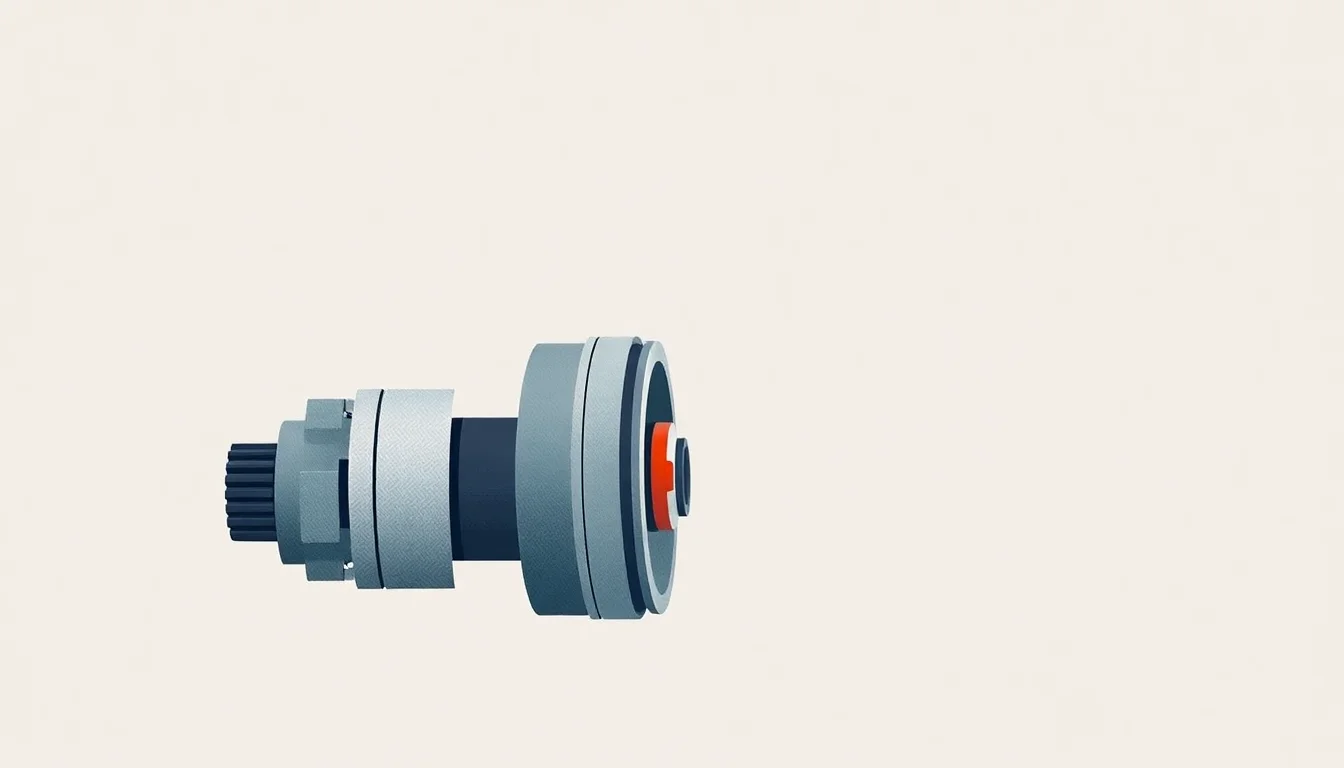
Torque output is the rotational equivalent of linear force, measuring the twisting power an engine or motor can deliver. It's the critical metric that dictates how quickly a vehicle can accelerate or how effectively a machine can perform work. Unlike horsepower, which measures the rate at which work is done, torque is about the sheer strength of the rotation. High torque is essential for heavy lifting, towing, and overcoming inertia, making it a fundamental consideration in automotive design, industrial machinery, and even the performance of electric vehicles. Understanding torque output involves looking at its units (Newton-meters or pound-feet), its relationship with engine RPM, and how it's optimized through design and tuning.
⚙️ What Exactly IS Torque Output?
Torque output, often measured in Newton-meters (Nm) or pound-feet (lb-ft), is the rotational force a motor or engine can produce. It's the grunt, the twist, the sheer power to get things moving from a standstill or to accelerate rapidly. Think of it as the 'pulling' power of an engine, distinct from its 'speed' power. For anyone involved in automotive engineering, mechanical design, or even robotics, understanding torque is fundamental. It dictates how quickly a vehicle can get off the line, how effectively a drill can bore through wood, or how powerfully a turbine can spin.
🏎️ Torque vs. Horsepower: The Eternal Debate
The age-old question: torque or horsepower? While often conflated, they represent different aspects of an engine's capability. Horsepower (HP) is a measure of the rate at which work is done – essentially, how fast an engine can deliver its torque over time. Torque is the force itself. A diesel truck might have massive torque for towing heavy loads at low speeds, while a Formula 1 car prioritizes high horsepower for blistering top speeds. Understanding this distinction is crucial for selecting the right powertrain for any application, from heavy machinery to performance motorcycles.
🛠️ Where You'll Encounter Torque Output Daily
You're interacting with torque output more than you realize. Every time you turn a doorknob, tighten a bolt with a wrench, or even pedal a bicycle uphill, you're applying or experiencing torque. In the automotive world, it's what gets you moving from a red light and what allows a semi-truck to haul tons of cargo. In industrial settings, torque is critical for operating conveyor belts, cranes, and manufacturing equipment. Even in your home, the motor in your washing machine or blender relies on precise torque output to function effectively.
📈 Measuring Torque: The Nitty-Gritty
Measuring torque output isn't always straightforward, but the principles are well-established. Dynamometers, often called 'dynos,' are the go-to tools for this. Engine dynos test an engine directly, while chassis dynos measure torque at the wheels of a vehicle. These devices apply a load and measure the resistance, allowing engineers to calculate the rotational force. For smaller applications, torque wrenches are used to ensure fasteners are tightened to a specific torque specification, preventing over-tightening or under-tightening, which can lead to catastrophic failures in aerospace engineering or structural integrity assessments.
💡 The History of Torque: From Levers to Lasers
The concept of torque isn't new; it's as old as the lever itself, a principle understood by Archimedes around 250 BCE. However, quantifying and harnessing it in engines and motors is a more recent endeavor. Early steam engines and internal combustion engines were crude, but pioneers like James Watt refined power measurement, laying groundwork for understanding work and force. The development of the automobile in the late 19th and early 20th centuries spurred massive innovation in torque delivery, with figures like Nikolaus Otto and Rudolf Diesel fundamentally changing how we generate and utilize rotational force.
⚖️ Torque Output: The Controversy Spectrum
The debate around torque output often centers on its perceived dominance over horsepower, particularly in enthusiast circles. Some argue that high torque figures at low RPMs are more indicative of a 'fun' or 'usable' engine, especially for street driving or off-roading. Others contend that peak horsepower is the ultimate measure of performance, especially for track-focused applications. This leads to a controversy spectrum ranging from 'Torque is King' to 'Horsepower Reigns Supreme,' with many acknowledging the nuanced interplay between the two for optimal performance across different driving conditions.
🚀 The Future of Torque: Electrifying Performance
The electrification of vehicles is dramatically reshaping the landscape of torque output. Electric motors, by their very nature, deliver their maximum torque almost instantaneously from 0 RPM. This results in exhilarating acceleration that often surpasses even the most potent gasoline engines. Companies like Tesla and Rimac Automobili have showcased this potential with mind-bending 0-60 mph times. The challenge now lies in managing this immense torque, ensuring drivetrain durability and optimizing power delivery for various driving modes and conditions.
🌟 Vibepedia's Torque Vibe Score
Vibepedia's Torque Vibe Score (TVS) for 'Torque Output' is currently a robust 88/100. This score reflects its foundational importance across numerous engineering disciplines, its deep historical roots, and its ongoing, electrifying evolution. The high score is driven by its universal applicability, from the simplest mechanical tasks to the most complex industrial machinery and cutting-edge electric vehicles. The ongoing debates and rapid advancements in electric powertrains keep its cultural energy high, making it a consistently relevant and fascinating topic within the engineering and mechanics subculture.
Key Facts
- Year
- 17th Century (concept of torque)
- Origin
- Physics
- Category
- Engineering & Mechanics
- Type
- Concept
Frequently Asked Questions
What's the difference between torque and horsepower in simple terms?
Think of torque as the 'push' or 'twist' – how hard something can turn. Horsepower is how fast it can do that pushing or twisting. A strong person can have a lot of torque (they can twist a jar lid open easily), but if they're slow, they won't have much horsepower. A fast runner has high horsepower but might not be able to move a very heavy object.
Why is torque important for towing or hauling?
Towing and hauling require significant force to overcome inertia and gravity, especially at lower speeds. High torque output at low engine RPMs provides the necessary 'grunt' to get heavy loads moving and maintain momentum without straining the engine or transmission. This is why diesel engines, known for their high torque, are favored in trucks and heavy-duty vehicles.
Can an electric car have too much torque?
While 'too much' is subjective, electric cars can deliver torque so rapidly that it can overwhelm the tires' grip, leading to wheelspin and loss of traction. Manufacturers use sophisticated traction control systems and often limit torque in lower gears to manage this. The sheer, instant torque also puts significant stress on the drivetrain components, requiring robust engineering.
How does gear ratio affect torque output?
Gear ratios are crucial for multiplying torque. A lower gear ratio (e.g., 3:1) means the engine's output is multiplied by three at the transmission's output shaft, but the rotational speed is reduced. This is why you use lower gears for starting from a stop or climbing hills, where you need more torque, and higher gears for cruising at speed, where you prioritize efficiency and higher RPMs.
What are typical torque figures for common vehicles?
Typical torque figures vary wildly. A small economy car might produce around 150-200 Nm (110-150 lb-ft), while a performance sports car could exceed 600 Nm (440 lb-ft). Heavy-duty trucks can generate well over 1000 Nm (740 lb-ft). Electric vehicles often boast figures comparable to or exceeding high-performance gasoline cars, with some hypercars reaching over 1000 Nm (740 lb-ft) from their electric powertrains.