
Contents
Overview
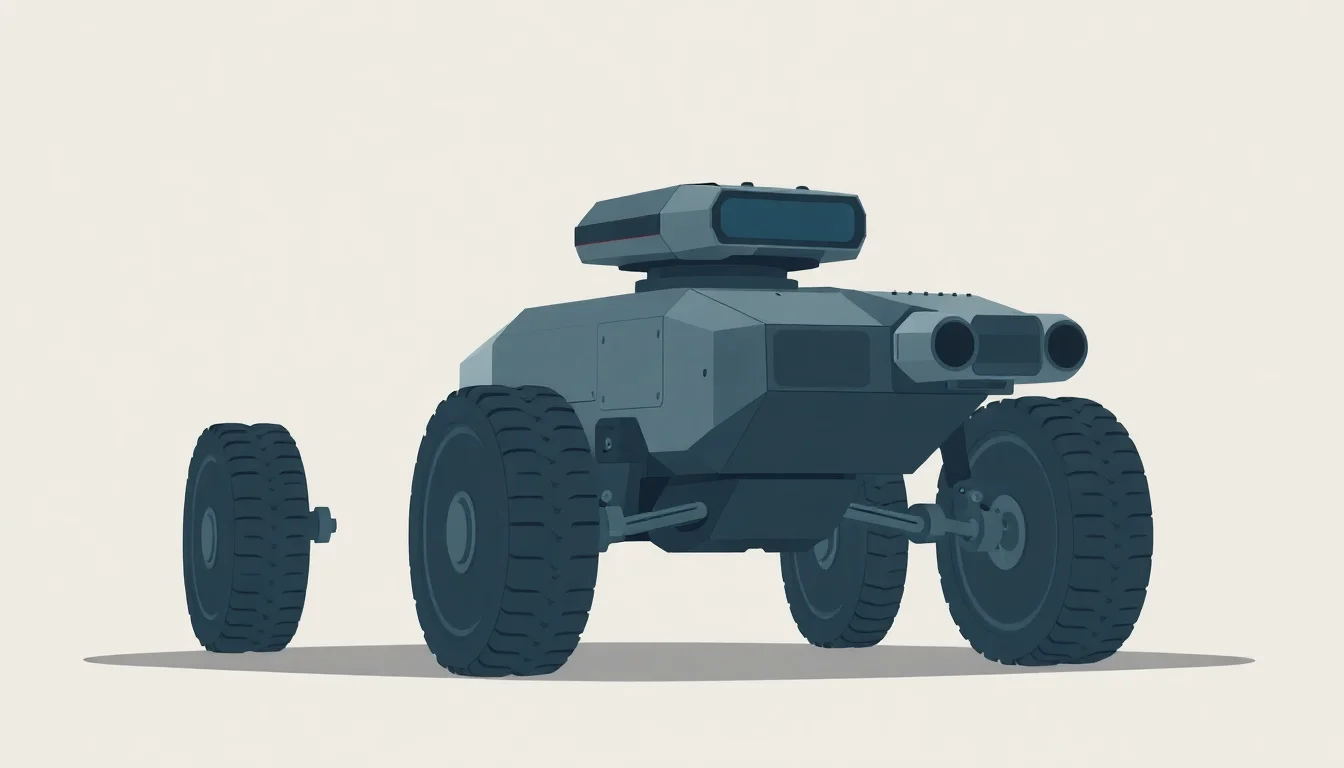
📖 Overview of UGVs: Unmanned Ground Vehicles (UGVs) are robotic systems designed to operate on the ground without a human onboard. They are utilized in various sectors, including military, agriculture, and logistics. UGVs can be remotely controlled or operate autonomously using advanced sensors and AI algorithms. The UGV market is expected to grow significantly, with a projected value of $6.5 billion by 2026, driven by technological advancements and increasing demand for automation in various industries. For more on the evolution of these technologies, see UGV History.
🌍 Applications of UGVs
🌍 Applications of UGVs: UGVs serve a multitude of purposes across different fields. In the military, they are used for reconnaissance, bomb disposal, and logistics support. In agriculture, UGVs assist in planting, monitoring crops, and applying pesticides. The logistics sector employs UGVs for warehouse automation and last-mile delivery. Each application highlights the versatility of UGVs, showcasing their ability to enhance efficiency and safety in operations. For a deeper dive into military applications, check out Military UGVs.
📍 Location & Access
📍 Location & Access: UGVs are developed and tested in various locations worldwide, with significant hubs in the United States, Europe, and Asia. Notable facilities include the U.S. Army's Robotics Research Center in Maryland and the European Robotics Forum in various European cities. Access to these facilities may be limited to industry professionals or researchers, but many companies offer demonstrations at trade shows and expos. To find upcoming events, refer to UGV Expos.
💰 Pricing & Plans
💰 Pricing & Plans: The cost of UGVs varies widely based on their capabilities and applications. Basic models can start at around $10,000, while advanced military-grade UGVs can exceed $1 million. Companies often offer leasing options or service contracts for businesses looking to integrate UGVs into their operations without a large upfront investment. For a comparison of pricing across different models, see UGV Pricing.
⭐ What People Say
⭐ What People Say: User feedback on UGVs is generally positive, highlighting their efficiency and reliability. Military personnel appreciate the reduced risk to human life, while agricultural users note significant labor savings. However, concerns about the cost and maintenance of these systems persist. Reviews on platforms like Tech Review and Robotics Weekly provide insights into user experiences and product performance.
🔧 Technical Specifications
🔧 Technical Specifications: UGVs come equipped with various sensors, cameras, and communication systems that enable them to navigate and perform tasks autonomously. Specifications can include payload capacity, battery life, and operational range. For instance, the iRobot PackBot has a weight of 27 kg and can carry a payload of up to 11 kg, making it suitable for military applications. For detailed specs on popular models, refer to UGV Specifications.
📈 Future Trends
📈 Future Trends: The UGV market is poised for rapid growth, with trends indicating a shift towards increased autonomy and AI integration. Companies are exploring the use of machine learning to improve navigation and decision-making capabilities. Additionally, the rise of smart cities and automated supply chains is expected to drive demand for UGVs in urban environments. For insights into emerging technologies, see Future Technologies.
🤖 Leading Companies in UGV Development
🤖 Leading Companies in UGV Development: Key players in the UGV market include Northrop Grumman, iRobot, and Clearpath Robotics. Each company brings unique innovations to the table, from military-grade robots to agricultural solutions. Northrop Grumman's MQ-8 Fire Scout is a notable example of a UGV used in military operations. For a comprehensive list of companies, check out UGV Companies.
🛠️ Comparison with Similar Technologies
🛠️ Comparison with Similar Technologies: UGVs are often compared to Unmanned Aerial Vehicles (UAVs) and Unmanned Underwater Vehicles (UUVs). While UAVs excel in aerial surveillance and reconnaissance, UGVs are better suited for ground operations that require interaction with the environment. UUVs, on the other hand, are specialized for underwater tasks. Each type of unmanned vehicle has its strengths and weaknesses, making them complementary in various applications. For more on UAVs, see UAV Overview.
📞 How to Get Started
📞 How to Get Started: For businesses interested in integrating UGVs, the first step is to assess specific needs and applications. Researching available models and contacting manufacturers for demonstrations is crucial. Trade shows and industry conferences are excellent venues to explore options and network with experts. To find upcoming events and resources, visit UGV Resources.
Key Facts
- Year
- 2023
- Origin
- The concept of UGVs dates back to the 1960s, with significant advancements occurring in the 21st century.
- Category
- Technology
- Type
- Technology
Frequently Asked Questions
What are the main types of UGVs?
UGVs can be classified into several categories, including wheeled, tracked, and legged vehicles. Wheeled UGVs are commonly used for logistics and surveillance, while tracked UGVs are favored for rough terrain. Legged UGVs, though less common, are being developed for advanced mobility in complex environments.
How do UGVs navigate?
UGVs typically navigate using a combination of GPS, inertial navigation systems, and onboard sensors like LIDAR and cameras. These technologies allow them to create maps of their environment and avoid obstacles autonomously.
Are UGVs safe to use?
While UGVs are designed to enhance safety by reducing human risk in hazardous environments, they are not without challenges. Issues such as software reliability, cybersecurity, and the potential for accidents must be addressed to ensure safe operation.
What is the lifespan of a UGV?
The lifespan of a UGV can vary significantly based on its design, usage, and maintenance. Generally, military UGVs are built for durability and can last several years, while commercial models may have shorter lifespans depending on operational conditions.
Can UGVs operate in adverse weather conditions?
Many UGVs are designed to operate in various weather conditions, including rain, snow, and extreme temperatures. However, their effectiveness can be impacted by severe weather, and specific models may have limitations based on their sensors and materials.