
Contents
- 🎵 Origins & History
- ⚙️ How It Works
- 📊 Key Facts & Numbers
- 👥 Key People & Organizations
- 🌍 Cultural Impact & Influence
- ⚡ Current State & Latest Developments
- 🤔 Controversies & Debates
- 🔮 Future Outlook & Predictions
- 💡 Practical Applications
- 📚 Related Topics & Deeper Reading
- Frequently Asked Questions
- References
- Related Topics
Overview
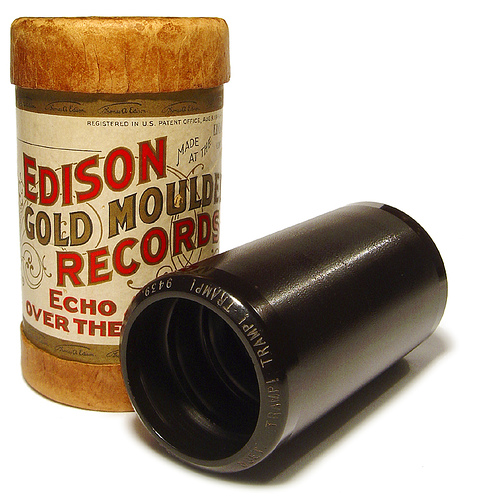
Wax cylinders represent the primordial soup of recorded sound, a revolutionary medium that allowed for the first time in history the capture and playback of audio. Emerging in the late 19th century, these hollow cylinders, typically made of a wax-based compound, bore sound grooves etched onto their outer surface. When spun on a phonograph, a stylus would trace these grooves, mechanically reproducing the recorded sound. While early iterations used tinfoil, the development of wax formulations by figures like Alexander Graham Bell and Thomas Edison in the 1880s and 1890s paved the way for commercial viability. For a brief but crucial period, these 'records' were the dominant format for home entertainment and oral history, before being eclipsed by the more robust and mass-producible disc records in the early 20th century. Despite their obsolescence, surviving wax cylinders offer an invaluable, albeit delicate, window into the sonic past.
🎵 Origins & History
The genesis of the wax cylinder is inextricably linked to the dawn of sound recording technology in the late 1870s. While Thomas Edison is often credited with the invention of the phonograph in 1877, his initial designs utilized tinfoil wrapped around a metal cylinder. This early iteration was prone to rapid wear and offered poor fidelity. The critical leap to wax occurred in the 1880s, with independent work by Alexander Graham Bell's Volta Laboratory and Emile Berliner exploring various materials. However, it was the development of improved wax compounds, notably by Edison's company and others like the Indiana Recording Company, that truly commercialized the format. By the mid-1890s, wax cylinders, offering better durability and sound quality than tinfoil, became the standard, ushering in the golden age of the cylinder phonograph.
⚙️ How It Works
The magic of a wax cylinder lies in its elegant mechanical simplicity. Sound waves striking a diaphragm within the phonograph cause it to vibrate. These vibrations are amplified and transferred to a stylus, which then etches a corresponding undulating groove onto the surface of the rotating wax cylinder. The depth or lateral displacement of this groove directly mirrors the amplitude and frequency of the original sound. To reproduce the sound, the cylinder is placed on a phonograph and rotated at a consistent speed, typically 120 or 160 revolutions per minute. A stylus, connected to a diaphragm within a horn, traces the groove. As the stylus moves, it vibrates the diaphragm, which in turn amplifies the sound and projects it through the horn. The wax material, while susceptible to wear, allowed for a relatively faithful, albeit monophonic, capture of sound.
📊 Key Facts & Numbers
The reign of the wax cylinder, though brief, was impactful. It's estimated that by 1900, over 15,000 phonograph parlors existed in the United States alone, where patrons could listen to recorded music for a nickel. The Edison National Historic Site estimates that over 150 million cylinders were produced between 1889 and 1912. Early cylinders typically offered only about 2 minutes of recording time, a stark contrast to modern digital formats. The price of a blank wax cylinder in the early 1900s could range from 25 to 75 cents, a significant sum for the average worker earning perhaps $10-$20 per week. Despite their fragility, an estimated 50,000 to 100,000 wax cylinders are believed to survive in various collections worldwide.
👥 Key People & Organizations
Several key figures and organizations propelled the wax cylinder into the public consciousness. Thomas Edison, through his Edison Companies, was a relentless innovator and marketer of the phonograph and its cylinder medium. Alexander Graham Bell and his associates at the Volta Laboratory also made significant contributions to wax cylinder technology. The Victor Talking Machine Company, though later more famous for disc records, initially produced cylinder phonographs and records. Independent manufacturers like the Indiana Recording Company and U.S. Everlasting Record Company also played roles in the competitive landscape. Archivists and historians at institutions like the Library of Congress and the Smithsonian Institution are crucial in preserving and studying surviving cylinders.
🌍 Cultural Impact & Influence
Wax cylinders fundamentally altered the cultural landscape by democratizing access to sound. For the first time, people could hear recorded voices of politicians, singers, and orators long after their performances. This technology fueled the nascent recording industry, creating new forms of entertainment and celebrity. The cylinder phonograph became a centerpiece in many homes, influencing social habits and leisure time. It also served as an invaluable tool for ethnographic research and oral history, capturing languages, music, and stories that might otherwise have been lost. The very concept of 'listening' as a passive, repeatable activity was born with the cylinder.
⚡ Current State & Latest Developments
While no longer a commercial format, wax cylinders remain a vibrant area of interest for collectors, historians, and audio restoration specialists. The Cylinder Preservation and Access project, a collaborative effort involving numerous institutions, works to digitize and make accessible surviving recordings. Specialized companies and individual enthusiasts meticulously restore antique phonographs to play these fragile artifacts. Advances in digital audio restoration techniques, such as those employed by the George Blood Audio firm, are crucial for extracting usable sound from degraded cylinders, allowing for the rediscovery of forgotten performances and historical moments.
🤔 Controversies & Debates
The primary controversy surrounding wax cylinders centers on their inherent fragility and the challenges of preservation and playback. The wax compound itself can degrade, become brittle, or even melt under adverse conditions, leading to the loss of recorded information. Furthermore, the specialized machinery required to play them—the phonograph—is rare and often requires expert maintenance. Debates persist among archivists regarding the best methods for long-term storage and digitization, balancing the need for access with the imperative to prevent further damage. The ethical considerations of digitizing and distributing historical recordings, particularly those with complex ownership histories, also arise.
🔮 Future Outlook & Predictions
The future of wax cylinders lies primarily in digital preservation and access. Projects like Cylinder Preservation and Access are actively working to create high-fidelity digital surrogates of as many surviving cylinders as possible. This ensures that the sonic content is preserved even if the physical artifact deteriorates. Researchers are also exploring advanced imaging techniques, such as optical scanning, to read the grooves without physical contact, potentially reducing wear on playable cylinders. While the physical format is unlikely to see a commercial resurgence, its historical and informational value will continue to be explored through digital means, making these early recordings accessible to a global audience.
💡 Practical Applications
The most significant practical application of wax cylinders today is as historical artifacts and sources for audio restoration. Museums and archives utilize them to preserve and study early sound recording techniques and to access unique historical audio content. Audio engineers and restoration specialists use them to recover lost performances, speeches, and everyday sounds from the late 19th and early 20th centuries. For collectors, the practical application is the enjoyment of a tangible piece of audio history, often requiring the restoration and maintenance of antique phonographs. The cylinders themselves serve as primary source material for understanding the evolution of media technology and popular culture.
Key Facts
- Year
- c. 1886-1910s
- Origin
- United States
- Category
- technology
- Type
- product
Frequently Asked Questions
What exactly is a wax cylinder?
A wax cylinder is an early sound recording medium, a hollow cylinder typically made of a wax-based compound. Sound was etched into its outer surface as a groove by a stylus connected to a diaphragm. When placed on a phonograph and rotated, a stylus tracing this groove would mechanically reproduce the recorded sound through a horn. These were the primary format for recorded sound from the late 1880s through the early 1910s, predating vinyl records and digital audio.
Who invented the wax cylinder?
While Thomas Edison invented the phonograph in 1877 using tinfoil, the transition to wax cylinders was a more gradual development involving several innovators. Alexander Graham Bell's Volta Laboratory made significant contributions in the 1880s. However, it was the refinement of wax compounds and manufacturing processes by Edison's company and other manufacturers in the late 1880s and 1890s that led to the commercial viability and widespread adoption of the wax cylinder format.
Why did wax cylinders disappear?
Wax cylinders were largely replaced by disc records due to several factors. Disc records, pioneered by Emile Berliner, were generally more durable, easier to mass-produce, and allowed for longer recording times. The disc format also lent itself better to standardization and mass distribution, eventually leading to its market dominance by the 1910s. While wax cylinders offered a unique sonic character, their fragility and limitations ultimately led to their obsolescence.
How are wax cylinders preserved today?
Preserving wax cylinders is a delicate process due to their inherent fragility. They require stable environmental conditions, typically cool and dry, to prevent degradation or melting. Modern preservation efforts heavily rely on digitization, using specialized equipment and advanced audio restoration techniques to create high-fidelity digital copies. Projects like Cylinder Preservation and Access are dedicated to cataloging, digitizing, and making these historical recordings accessible to researchers and the public.
What kind of sound quality can you expect from a wax cylinder?
The sound quality of a wax cylinder varies greatly depending on the original recording quality, the condition of the cylinder, and the playback equipment. Generally, early recordings are monophonic with limited frequency range and dynamic range. They often possess a distinctive 'warm' or 'hissy' character due to the mechanical playback and the nature of the wax material. While not comparable to modern audio fidelity, the sound captured is a direct mechanical reproduction of the original performance, offering a unique historical sonic experience.
Can I still buy or play wax cylinders?
While no longer manufactured for commercial sale, wax cylinders can be found through antique dealers, auction sites, and specialized collectors. Playing them requires a functional phonograph designed for cylinders, which are themselves rare and often require restoration. Many enthusiasts collect both cylinders and phonographs. For most people, the most accessible way to experience the sound of wax cylinders is through digitized archives and online collections dedicated to historical audio.
What is the historical significance of wax cylinders?
Wax cylinders are profoundly significant as the first widely adopted medium for capturing and reproducing sound. They democratized audio, allowing for the preservation of voices, music, and historical events for future generations. This technology laid the groundwork for the entire recording industry and fundamentally changed how people consumed entertainment and interacted with culture. They represent a critical evolutionary step in media technology, bridging the gap between the spoken word and mass media.