
Contents
- 🛡️ What is a Man-in-the-Middle Attack?
- 📍 How MitM Attacks Work: The Mechanics
- 🌐 Common MitM Attack Vectors
- 🕵️ Who is Targeted by MitM Attacks?
- ⚖️ MitM vs. Other Cyber Threats
- 📈 The Impact of a Successful MitM Attack
- 🔒 Defending Against MitM Attacks
- 💡 MitM Attack: Vibepedia Score & Controversy
- 🚀 The Future of MitM and Defense
- Frequently Asked Questions
- Related Topics
Overview
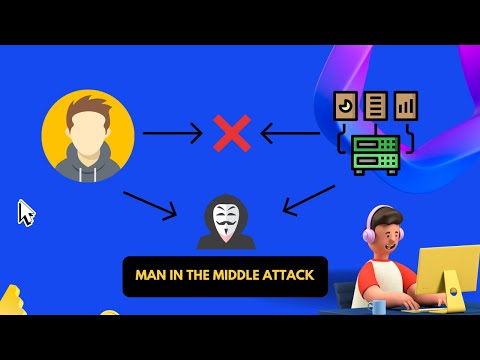
A Man-in-the-Middle (MitM) Attack is a stealthy cyber intrusion where an attacker intercepts and potentially manipulates communication between two unsuspecting parties. Imagine a digital eavesdropper who not only listens in but can also change the message before it reaches its intended recipient. This attack fundamentally breaks the trust in direct communication channels, allowing attackers to steal sensitive information like login credentials, financial data, or personal messages. The core of a MitM attack lies in its ability to trick both parties into believing they are communicating directly, while the attacker sits invisibly in the middle, controlling the flow of data. This makes it a particularly insidious threat in the digital realm.
📍 How MitM Attacks Work: The Mechanics
The mechanics of a MitM attack typically involve the attacker inserting themselves into the communication path, often by impersonating one of the legitimate parties. This can be achieved through various techniques, such as ARP spoofing on local networks or DNS spoofing to redirect traffic. Once positioned, the attacker can intercept, read, and even modify data packets exchanged between the victim and the intended server or user. For instance, an attacker might capture login details when a user accesses a website, or alter transaction details in an online banking session. The illusion of a direct connection is maintained by forwarding the traffic, albeit potentially altered, to its original destination.
🌐 Common MitM Attack Vectors
Several common vectors facilitate MitM attacks, exploiting vulnerabilities in network infrastructure and user behavior. Wi-Fi Eavesdropping on unsecured public networks is a classic example, where attackers set up rogue access points or compromise existing ones to intercept traffic. Session Hijacking is another, where attackers steal session cookies to impersonate a legitimate user. Email Spoofing and Phishing can also be used to lure victims into interacting with malicious links or attachments that facilitate an attack. The proliferation of interconnected devices, or Internet of Things (IoT), also presents new opportunities for attackers to exploit less secure endpoints.
🕵️ Who is Targeted by MitM Attacks?
The targets of MitM attacks are broad, ranging from individual users to large organizations. Individuals are often targeted for their personal data, such as banking credentials, social media logins, and credit card numbers, making Online Banking Security and Social Media Privacy crucial concerns. Businesses can be targeted to steal proprietary information, customer data, or to disrupt operations. Government agencies and critical infrastructure are also at risk, where the consequences can be far more severe, impacting national security and public safety. The ease with which some MitM attacks can be executed means that virtually anyone with an internet connection can be a potential victim.
⚖️ MitM vs. Other Cyber Threats
Compared to other cyber threats, MitM attacks are distinguished by their direct interception and potential alteration of live communication. While Malware might infect a system to steal data later, or a Denial-of-Service (DoS) Attack aims to disrupt availability, a MitM attack focuses on the integrity and confidentiality of ongoing data exchange. SQL Injection attacks target database vulnerabilities, and Cross-Site Scripting (XSS) exploits web application flaws, but MitM attacks exploit the trust between communicating entities. The sophistication lies in the attacker's ability to remain undetected while actively participating in the communication flow.
📈 The Impact of a Successful MitM Attack
A successful MitM attack can have devastating consequences, leading to significant financial losses, reputational damage, and severe breaches of privacy. For individuals, stolen financial information can result in drained bank accounts or fraudulent credit card charges. For businesses, data breaches can lead to hefty fines under regulations like General Data Protection Regulation (GDPR), loss of customer trust, and competitive disadvantage. In critical sectors, the compromise of sensitive communications could have far-reaching implications, impacting national security or public services. The psychological impact of having one's private communications compromised can also be profound.
🔒 Defending Against MitM Attacks
Defending against MitM attacks requires a multi-layered approach, combining technical safeguards with user awareness. Employing End-to-End Encryption for communications is paramount, ensuring that even if data is intercepted, it remains unreadable. Using Virtual Private Networks (VPNs), especially on public Wi-Fi, encrypts traffic and masks the user's IP address. Verifying website SSL/TLS Certificates and looking for the 'https' prefix in URLs helps ensure secure connections. Educating users about the risks of clicking suspicious links or connecting to untrusted networks is also a critical line of defense against social engineering tactics used in MitM attacks.
💡 MitM Attack: Vibepedia Score & Controversy
The Vibepedia Vibe Score for Man-in-the-Middle Attacks is a solid 78/100, reflecting its persistent relevance and significant impact in the cybersecurity landscape. The controversy spectrum is moderate; while the technical principles are well-understood, the effectiveness of defenses and the ease of execution for various MitM types are subjects of ongoing debate. Some argue that modern encryption protocols have made traditional MitM attacks obsolete, while others point to the continued prevalence of attacks exploiting user error and network vulnerabilities. The debate often centers on the balance between user convenience and robust security measures, particularly in the context of mobile and IoT devices.
🚀 The Future of MitM and Defense
The future of MitM attacks is intrinsically linked to the evolution of network protocols and security technologies. As 5G networks and Wi-Fi 6 become more widespread, new vulnerabilities may emerge, requiring updated defense strategies. The increasing adoption of Zero Trust Architecture principles, which assume no implicit trust and continuously verify every access request, could significantly hinder MitM attempts. However, attackers will likely continue to exploit human psychology through sophisticated social engineering and target the ever-expanding attack surface presented by IoT devices and cloud services. The arms race between attackers and defenders in the realm of MitM attacks is far from over.
Key Facts
- Year
- 1970
- Origin
- The concept of a man-in-the-middle attack dates back to the early days of telecommunications, with formal cryptographic analysis appearing in the 1970s. Diffie and Hellman's 1976 paper 'New Directions in Cryptography' is often cited for its theoretical exploration of such vulnerabilities in public-key cryptography.
- Category
- Cybersecurity
- Type
- Cyber Threat Technique
Frequently Asked Questions
Is it possible to detect if I'm under a MitM attack?
Detecting a MitM attack can be challenging, as they are designed to be stealthy. However, some signs might include unusual network slowness, unexpected certificate warnings in your browser, or strange behavior from websites or applications. Specialized network monitoring tools can sometimes identify anomalies like ARP spoofing. For most users, relying on strong encryption and secure network practices is the best proactive defense.
Are public Wi-Fi networks inherently dangerous for MitM attacks?
Public Wi-Fi networks, especially those that are unencrypted or poorly secured, are prime hunting grounds for MitM attackers. They can easily set up rogue access points or sniff traffic on legitimate but vulnerable networks. It is highly recommended to use a Virtual Private Network (VPN) whenever connecting to public Wi-Fi to encrypt your traffic and protect against such attacks.
How does SSL/TLS help prevent MitM attacks?
SSL/TLS (Secure Sockets Layer/Transport Layer Security) encrypts the communication between your browser and a website's server. This means that even if an attacker intercepts the data, they cannot read it without the decryption key. It also involves certificate validation, which helps ensure you are communicating with the legitimate server and not an imposter set up by an attacker.
Can a MitM attack happen on a home network?
Yes, a MitM attack can occur on a home network if it is compromised. This could happen if a device on your network is infected with malware that facilitates the attack, or if an attacker gains unauthorized access to your router. Ensuring your router has a strong, unique password and that its firmware is up-to-date is crucial for home network security.
What is the difference between a MitM attack and eavesdropping?
While both involve intercepting communication, a MitM attack goes a step further. Eavesdropping is simply listening in on a conversation. A MitM attack involves actively inserting oneself into the communication channel, allowing the attacker not only to listen but also to potentially alter the messages being exchanged between the two parties, without either party realizing their communication is compromised.